
The High-Fidelity Transmission of Bodhidharma: A New Translation
Second edition · 2026 · R508 digital review edition
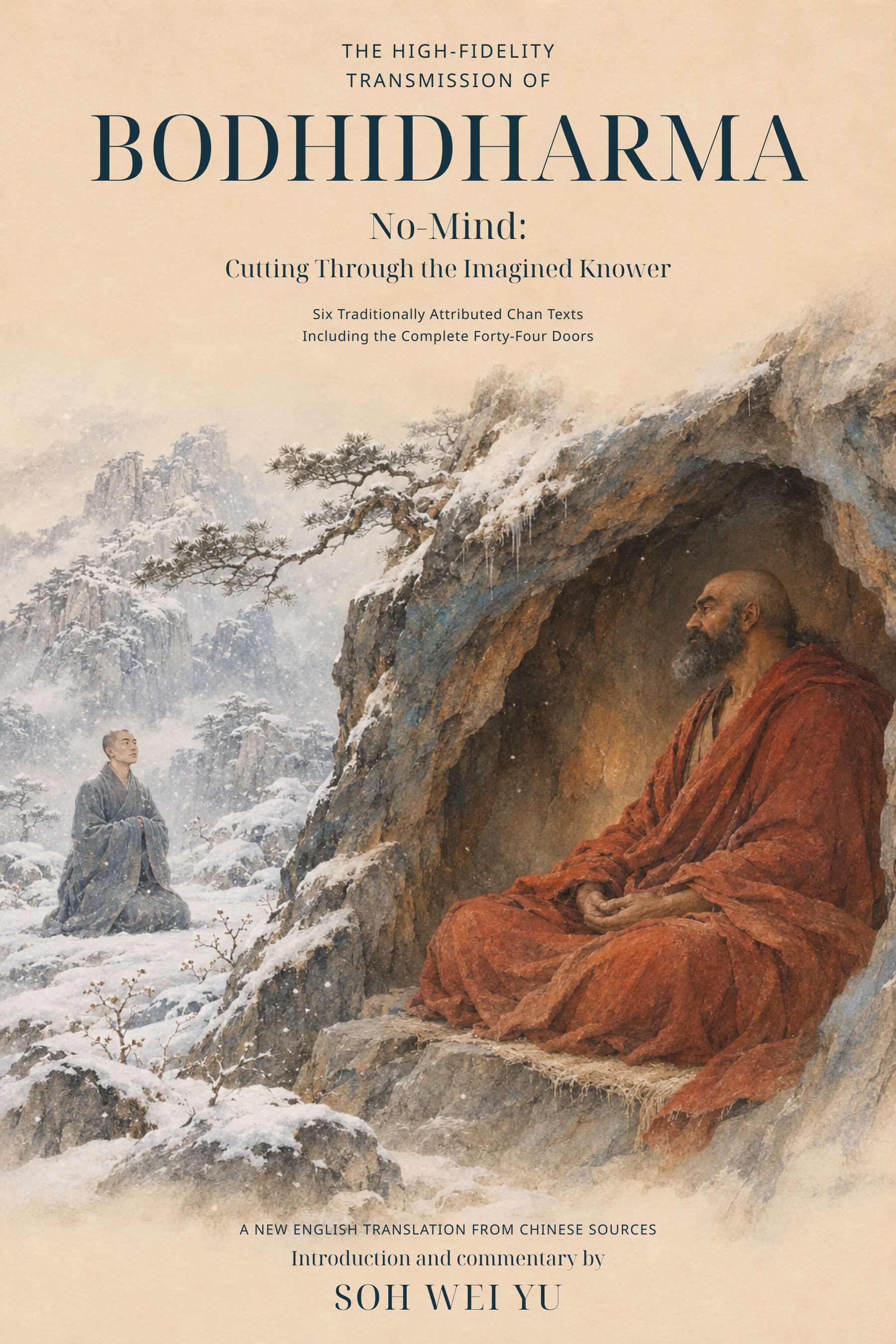
No-Mind: Cutting Through the Imagined Knower
Six traditionally attributed Chan texts, newly translated from Chinese sources, with introduction and commentary by Soh Wei Yu.
Read the latest available edition
Download PDF Download Word Download EPUB
Files updated: 9 November 2026 · R508. The PDF contains 342 pages in a 6 x 9-inch layout. These second-edition files are available for reading and study while final checks continue. The text has been reviewed, but checks of quotation use, formatting in Word and ebook readers, and accessibility are still needed. This is not yet the final print or retail edition.
If your browser displays an earlier PDF, refresh with Ctrl+F5 on Windows or Cmd+Shift+R on Mac, or download a fresh copy.
A new translation, not just a revised presentation
This second edition returns to the Chinese sources. It brings together six works transmitted under Bodhidharma's name, with historical context, notes on the Chinese sources and my commentary. The attribution is traditional: the texts have distinct histories, and the collection does not assume that every work was written by the historical Bodhidharma.
The central inquiry is direct: when seeing, hearing, sensing and knowing are already vivid and immediate, where is the separate knower imagined to stand behind them? No-mind does not mean blankness or the loss of knowing. My commentary approaches these texts through the Awakening to Reality understanding of anatta, luminosity, emptiness and dependent arising, while keeping that interpretation distinguishable from the translated passages.
What is inside
- Treatise on No-Mind (Wuxin Lun)
- Treatise on Four Practices, including the complete Forty-Four Doors of the expanded text
- Bloodstream Sermon
- Treatise on Realizing Nature (Wuxing Lun)
- Dharma Gate of Pacifying Mind (Anxin Famen)
- Treatise on Breaking Through Marks (Po Xiang Lun)
The translations are presented together with commentary and source discussion. An index to the Forty-Four Doors helps readers return to individual passages, while the opening material explains how the translation, source notes and commentary fit together.
Inside the book
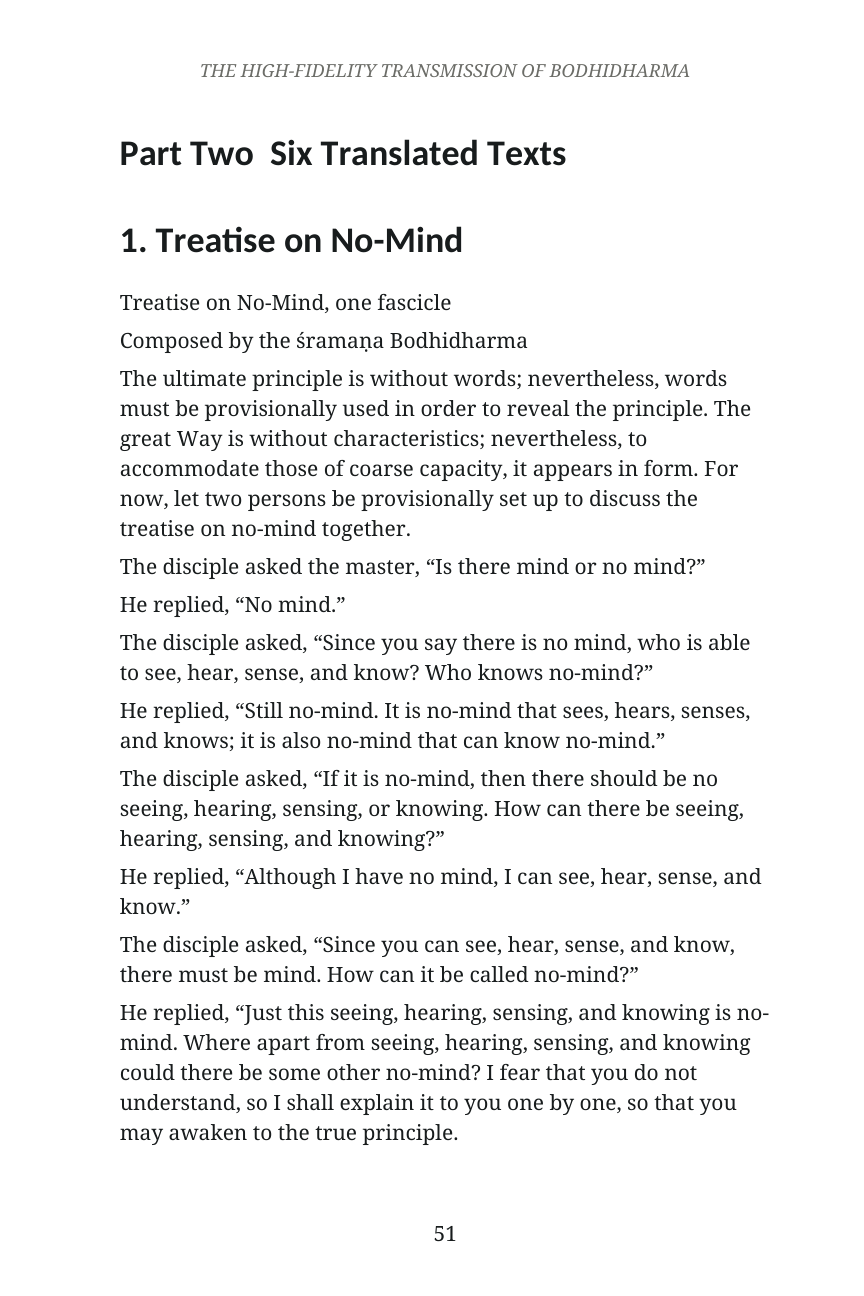
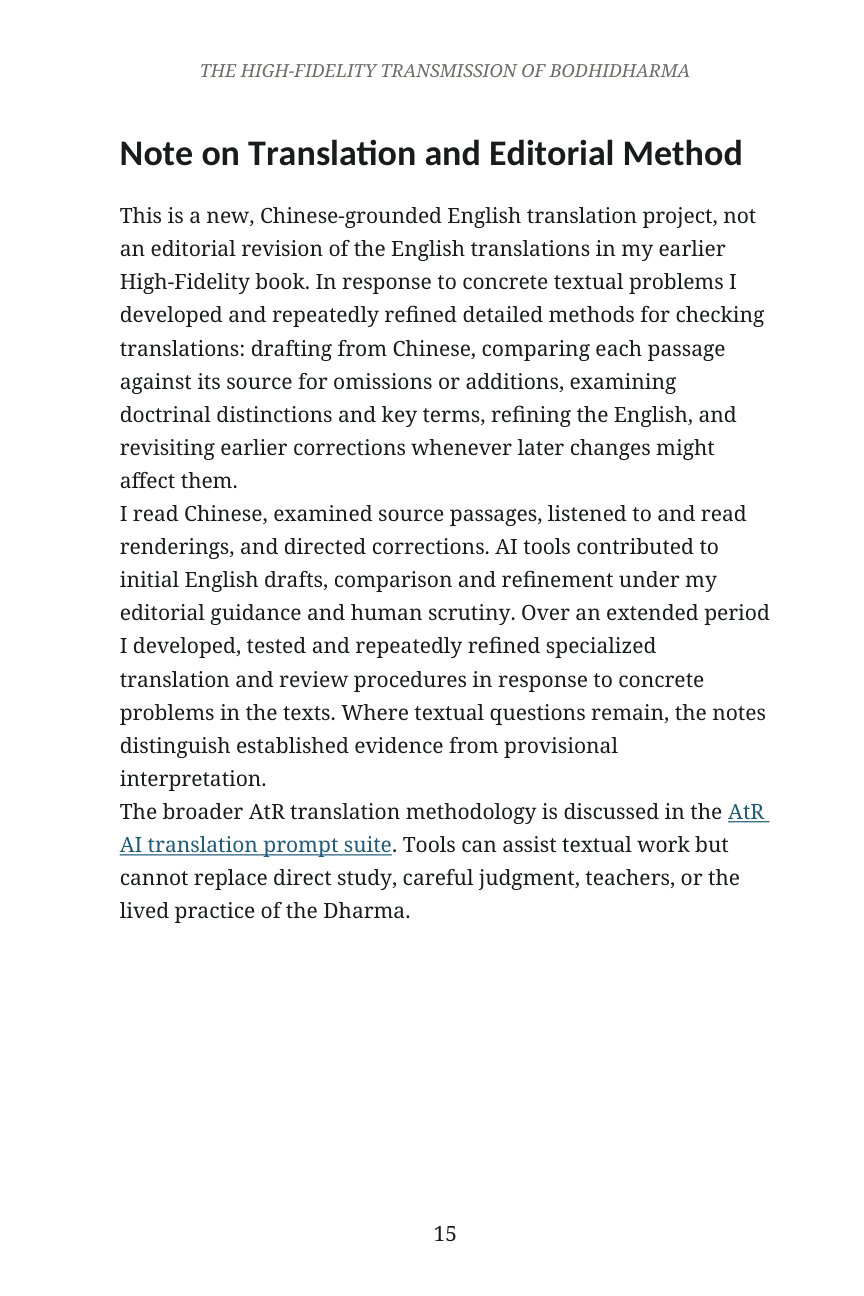
These are actual pages from the current R508 PDF, rather than promotional mock-ups.
How this translation was prepared
I read Chinese, examined source passages, read and listened to English renderings, and directed corrections. AI tools helped with drafting, comparison and revision under my direction and review. I checked for missing or added material, considered distinctions in the teachings and revisited earlier choices when later changes called for it. The notes make clear where the evidence is firm and where an interpretation remains uncertain.
What the latest revision clarifies
R508 further refines the discussion of luminosity and Presence-Awareness: their intimacy, vitality, intelligence and boundlessness are not reduced to the mere fact that experience is known. It also clarifies the distinction between temporary self-forgetting, recognition of Presence, and the insight of anatta. Seeing through an imagined owner or background does not diminish the vividness of experience.
For reading and study, begin with "How to Read This Edition" and the preface, then move into the translations. Textual study and tools can support practice; they cannot replace careful judgment, teachers or the lived practice of the Dharma.


Comments