
The Dharma Gate of Great Ease and Joy: The Practice of Nonthinking

Monday, August 03, 2026 Open post →
By

Chan teaching · Cameron Highlands · May 2009

The Dharma Gate of Great Ease and Joy: The Practice of Nonthinking

A Dharma Talk by Teacher Hong Wenliang on a Teaching of Zen Master Keizan · Day Three

Original Chinese Text: 大安樂法門,非思量之修行

The following is a passage from the teachings of Zen Master Keizan:

“For the sake of liberating sentient beings, one temporarily borrows birth-and-death. It is like a shadow, like an illusion, with nothing truly real; provisionally, let this be called the essential point. Know that there are two ways to this essential point. First: let go of the myriad conditions and stop all worldly activity. Let the mind settle like water without waves, like a clear sky without clouds. If this is accomplished, one can truly be free from all characteristics; this is called accomplishment through non-interpenetration. To abide here is the single-practice samādhi of zazen. This too is the wondrous practice of the Seven Buddhas and the vital key of the ancestral teachers. Even if one does not meet the right person, if one can abide here—belonging neither to knowing nor to not-knowing—one naturally becomes a person of the Way, and even the buddhas can do nothing with such a person. This is the leisurely person of the Way who has nothing more to learn and nothing contrived to do: neither awakening nor delusion appears, and there is no thought of attainment or non-attainment; one simply sits upright like Mount Sumeru. This is the direct way of becoming Buddha with this very mind, the mind-seal of all buddhas and the intimate transmission of buddhas and ancestors. It is called the Dharma Gate of Great Ease and Joy, the practice of nonthinking. Yet if one does not practice, this mind does not reveal itself. Therefore those who do not enter this Dharma gate are all dim and foolish people.

“Second: amid walking, standing, sitting, and lying down, whenever one is engaged in any activity, that is the crucial time. Not forgetting for even an instant, think of not-thinking, and awaken into that which discriminating consciousness cannot reach. It is like the time before heaven and earth have divided, before body and mind have sprouted, when, above and below and throughout the four intermediate directions, there is no equal or counterpart; east and west are not distinguished, north and south are not divided; like the instant before one who is falling has struck the ground, when one is dreaming but not yet fully awake, or after an arrow has left the bowstring but before it has struck the target. Forgetting yet not forgetting, think of not-thinking. In this way, let go of all effort; then one can be without doing and without contrivance, in accord with that keenly wakeful, indescribable place. This is the time when a single thought accords. At this time even Buddha does not reach it, nor can sentient beings attain it; this is called the Way. When lightning flashes and sparks fly from struck stone, when thunder explodes in one’s ears, when someone unexpectedly calls out, when one steps on something and the whole body suddenly feels intense pain, the mind is immediately aware, without any lapse of mindfulness. When one falls from a horse or drops from a bridge, through conditions such as these, knowing is exhausted, feeling is forgotten, and one awakens and enters—just as Xiangyan did in ancient times.”

— Zen Master Keizan

May 2009 Chan retreat at Sam Poh Wan Futt Chi, Cameron Highlands — teaching from the third day.

This is a passage from Zen Master Keizan’s teachings. Who was Keizan? Do all of you know? After Dōgen came Ejō; after Ejō came Giun; after Giun came Keizan. We previously introduced verses by Zen Master Daichi. Daichi held Keizan in extremely high regard and respected him deeply. My book The Profound Meaning of the Xinxin Ming is an explanation of the Xinxin Ming. The first part draws on Master Zhenxie’s Xinxin Ming Niangu; the second part draws on Keizan’s Shinjinmei Nentei. This passage is very important. I hope all of you will give it special attention. If you understand this teaching, you will know why “just sitting” is the true gate of the Buddhadharma.

“For the sake of liberating sentient beings, one temporarily borrows birth-and-death.” All accomplished people, for the sake of liberating sentient beings, manifest birth-and-death just as Śākyamuni Buddha, Zen Master Rujing, Zen Master Keizan, and these other masters did. They can temporarily borrow birth-and-death. Can this be done or not? If you merely seek this from them, can they make you able to do this? Impossible. If there were some special method, some expedient method, Śākyamuni Buddha would long ago have taught it to people one by one. He would not have needed to spend forty-nine years continually teaching the Dharma and continually urging everyone to sit beneath the bodhi tree as he did.

First you must understand what “temporarily borrowing birth-and-death” means. Did all of you come into this birth-and-death by “temporarily borrowing” it? Most of us probably came muddle-headedly. Because this birth-and-death is temporarily borrowed, the way our existence in birth-and-death appears is like a shadow in a movie—“like a shadow, like an illusion.” If it were not like a shadow and an illusion, could it be temporarily borrowed? It could not. What can be borrowed in this way is itself like a shadow and an illusion. We ourselves are “like shadows and illusions, without anything truly real”; there is not the slightest self-nature. A flower is like a shadow and an illusion, without true reality. A microphone is like a shadow and an illusion; there is no truly real microphone. Can you actually realize this? Very difficult! Isn’t it difficult? We look and immediately think, “This is a flower! This is a microphone! These are real things.” A flower cannot speak or transmit sound; a microphone is not red or green and has no floral fragrance. How could both be dreamlike and illusory? How could neither be real? It seems very strange.

“Provisionally, let this be called the essential point.” Let us provisionally call this the essential point. What is the essential point? “Like a shadow, like an illusion, without anything truly real.” Everything is like a shadow and an illusion; nothing has true reality. This is the most important point. No matter whether you study Vinaya, Pure Land, or Esoteric Buddhism, you can realize that all of this—including your own existence, including the white clouds and blue sky—is like a shadow or illusion, without the slightest true reality.

Śākyamuni Buddha says in the Diamond Sūtra: “All conditioned dharmas are like dreams, illusions, bubbles, and shadows; like dew and also like lightning. Thus should they be contemplated.” By “contemplate,” he is not teaching you to think this way or believe this way. That is useless. Believing is useless; thinking is useless. “Ah! Elder Bai says this is like a shadow and an illusion.” Or you repeat Keizan’s words and say, “Everything is like a shadow and an illusion.” What use is that? You still cannot freely and at ease “temporarily borrow birth-and-death.” You are still reborn according to your karma; at that time, even other-power is of no use.

Now we come to a very important point. Keizan tells us that we should know there are two methods for realizing this essential point. What is the essential point? Everything lacks true reality and is like a shadow and an illusion. This essential point can actually be realized. Everyone must be very clear about this: there is only one essential point—everything is “like a shadow, like an illusion, without anything truly real.” This must be personally realized. He then tells us two methods. Very few Zen masters speak to us this directly. Why does he do so? To make us know this essential point. In modern language, “essential point” simply means the one point that truly matters.

What is the first method? “Let go of the myriad conditions, stop all worldly activity, and let the mind settle like water without waves, like a clear sky without clouds.” When all of you sit every day, just sitting—shikantaza—is precisely to “let go of the myriad conditions.” Sitting itself is also one of the myriad conditions, so sitting too is let go. Then even sitting is no longer “sitting”; sitting is not sitting. Who is sitting? “Even a thousand sages do not know it”: even if a thousand sages came, they would not know what you were doing.

“Let go of the myriad conditions.” Do not say, “I am sitting in meditation.” If you say that, have you let go? No. “Stop all worldly activity.” While sitting, you think about this and that, think over principles, wonder whether this is the only method, wonder whether there is some easier way that does not require enduring pain in the legs—you keep thinking about such things. That is worldly activity. Why call it worldly activity? Because you generate all kinds of theories, opinions, and views. “Stop all worldly activity”: just sitting is precisely the stopping of all your worldly activity. If you can do this, then you are truly “just sitting.”

“Let the mind settle like water without waves, like a clear sky without clouds.” Like water with no waves, like a clear sky with no clouds. Do not misunderstand this. “Like water without waves, like a clear sky without clouds” does not mean sinking into dullness and not knowing anything. It does not belong to not-knowing. If you say that “the mind settles like water without waves” means knowing nothing—sitting there unable to see anything or hear anything—what is that? That is dullness. That is the absorption of non-perception! Do thoughts still come and go? Yes. If there is a sound while you are sitting, do you hear it? Yes. So “the mind settles like water without waves” does not mean knowing nothing. That is not what it means for the mind to settle. Whatever is naturally heard, seen, or thought—including all kinds of thoughts—is simply allowed to appear naturally, without interference. But once you identify it and say, “Ah! What is this thought?” it is already wrong. If you judge one thought to be good and another bad, you have inserted a worldly standard of evaluation.

“If this is accomplished, one can truly be free from all characteristics.” To be “free from all characteristics” does not mean that there are no appearances. It means not being swayed by appearances. “Do I want it or not? Do I like it or not?”—that means you are not “free from all characteristics.” To be “free from all characteristics” means that worldly activity has ceased. Sound is simply sound; thought is simply thought; breathing is simply breathing; a movement of mind is simply a movement of mind. This is what is meant by “accomplishment through non-interpenetration.”

In my book The Profound Meaning of the Cāntóngqì, I say a great deal about interpenetration and non-interpenetration; you can consult it. “To abide here is the single-practice samādhi of zazen.” Abiding in this place, in this state, is called “the single-practice samādhi of zazen.” “Let go of the myriad conditions”—and sitting itself is one of those myriad conditions. Stop worldly activity. Do not sit there thinking about how things are going at home, what use it is for me to be here, or whether there is some other way to study the Buddhadharma. All of that is worldly activity—your own thinking. If you are thinking in that way, it is already not the single-practice samādhi of zazen. You are doing your own kind of meditation; you are not just sitting. Everyone, pay special attention to this. Every day when you sit, you must “let go of the myriad conditions.” Every condition is to be let go.

What does “letting go” mean? It does not mean that dusts or conditions first exist and then I go and put them down. That is not it. It is not that a condition is there and you then let it go. “Let go of the myriad conditions” means that when a condition arises, you do not split it off and then recognize or identify it as something apart.

To put it simply: clap!—there is the sound of the hands. “Ah, I heard a sound.” That is already not letting go, because the sound cannot be separated from you. A thought arises. It is not a matter of thinking, “I have such-and-such a thought”; the thought cannot be separated from you. If you say, “I know what thought this is,” haven’t you separated yourself from the thought? You have. Is thought one of the myriad conditions? Yes. Yet the thought is not separate from you. You and the condition are one and the same. Clap! The sound is just this; you are not separate from the sound. This is perfectly clear and vivid. Is the sound sitting over there while I go over and hear it? Or does the sound travel to my ear, where I then hear it? Neither. Where is there any coming and going? There is none. And yet it is heard.

This is because “the entire world of the ten directions is the true human body.” Your whole being is simply yourself. But the moment I say “the whole is yourself,” you overlay it with the “self” you imagine. Ordinarily you think, “Oh, this is myself.” Then when you hear that everything is yourself, you impose that mistaken thing you take to be yourself upon the whole. That is the “I.” See? Haven’t you split things into two? Clap! Clap! Clap! Not “me”—no. The sound itself is the condition, the whole condition. The single-practice samādhi of zazen is to be precisely like this.

Can this be accomplished by some other method? Absolutely not. Those other approaches amount to continually relying on other people to recite mantras for me, bless me, recite the Buddha’s name for me, and so on.

I have spoken before about the difference between investigating kōans and sitting. There are people who awaken through kōan practice, but they are very few, and those who awaken through kōan practice also sit frequently as a basis for their practice. Milarepa sat and sat continuously. He sat until the flesh of his buttocks became hardened in patches. It is not that you can dispense with sitting and simply practice some method and then attain accomplishment. There is no such thing. Moreover, those who attain through those approaches are ultimately few.

Only just sitting is this simple: simply let go of the myriad conditions, pay no attention to all worldly activity, and just sit—and even “sitting” is absent. It does not matter whether your capacity is high, middling, or low; whether you are intelligent or dull makes no difference at all. Whether you are learned or even literate makes no difference at all. Everyone can do it. The point is to let you know that everything is “like a shadow, like an illusion, without anything truly real.” Nothing is truly real. Only this “single-practice samādhi of zazen”—this is the first method.

“Abide here.” Abide right here, regardless of whether your capacity is high, middling, or low. You need only let go of the myriad conditions and concern yourself with nothing; do not even concern yourself with that “not concerning yourself.” Sound is just sound. If you say, “Oh, I heard a sound,” that is already off. Someone comes in and you think, “Oh, I recognize this person”—that is already off. These conditions are originally one with you. Our fundamental ignorance is precisely to take them as an “other.” In fact, are they not all your own realm? They are all your own realm. Yet this does not mean clinging to this illusorily arisen body of the four great elements and five aggregates and taking that to be your own realm. The whole is the entire world of the ten directions. This has to be accomplished through sitting, through the samādhi of zazen.

This is “the wondrous practice of the Seven Buddhas”—the wondrous practice of the Seven Buddhas before Śākyamuni Buddha. This is not boasting that sitting is the best practice. It is “the wondrous practice of the Seven Buddhas, the vital key of the ancestral teachers.” “Even if one does not meet the right person, if one can abide here...” Suppose you cannot find an excellent teacher, a good spiritual friend to guide you. If you can abide here—cross your legs, take your seat, sit upright, let worldly affairs drop away, pay them no heed, and let go of the myriad conditions—then that is enough. If, while sitting, you keep bringing family matters or company business into your head and turning them over, you are wasting your time. That is not zazen. You are merely sitting there indulging in random thought.

“If one can abide here, belonging neither to knowing nor to not-knowing”—this is the most important point. There is a sound: the hands clap, and naturally it is known as the sound of hands clapping; a bird calls, and naturally the birdcall is known. To identify it as the sound of clapping hands or the sound of a bird is already “knowing.” Yet it “does not belong to knowing.” This “knowing” does not belong to it. Knowing always has an object known, doesn’t it? Without an object, what would there be to know? Before the knowing that takes something as an object arises, isn’t it already there? Whether you know it or not, it is there all along.

Knowing is knowing: “I know this is a durian.” But that knowing is not the durian itself. “This is a flower”—that is knowing; that knowing is not the flower itself. You do not know that the flower and you are originally together; instead you say, “Ah, this is a flower,” then take the “knowing” that recognizes it to be something real, something truly existent. That is where the problem begins.

If it does not belong to knowing, then does it belong to not-knowing? You look at a flower and have no idea what it is; hear a birdcall and do not know it is a bird; strike your foot on a stone and do not even know the foot hurts—is that not-knowing? That is simply confusion and dullness. It is not not-knowing. It is keenly alive—numinous, yet obscure. We are all right here. Abide here. “One naturally becomes a person of the Way.” Then you are accomplished. Must you obtain something from outside? Must you ask someone else for it? You yourself are already in this state.

Before knowing, there is already an object of knowing. When you take this as “I know,” that “I know” is your consciousness moving. Before consciousness moves, isn’t that already the case? Clap! Clap! Clap! Is sound simply sound, and are you simply you? If sound is sound and you are you, when does the sound travel to you, or when do you travel to the sound? Where do the two meet? Sound is just sound. In that one instant—clap!—the whole of you is the sound. Because you take the body to be yourself, you find this way of speaking strange. You cannot release your clinging to this body and mind. You keep using all the functions of body and mind to imagine and to demand, and therefore you cannot understand what the Buddha is saying.

“Even the buddhas can do nothing with such a person.” You have naturally become a person of the Way; even the buddhas have no handle on you. Who could have a handle on you? Even demons would be frightened on seeing you. But if there is an “I” here hoping for this and that—hoping to reach the Pure Land, hoping to become a buddha, hoping to transform into light, hoping to manifest multiple bodies, and so forth—then there is a “you” there thinking this way and that, and the demons immediately arrive. You immediately become an ally of the demons. At that point the weakness of your attachment to body and mind can easily be exploited. If you want to be reborn in the Western Pure Land and escape birth-and-death, so long as there is a “you” there hoping for it, there is an opening for demons to take advantage of. “Even the buddhas can do nothing with such a person”—only this is “the leisurely person of the Way who has nothing more to learn and nothing contrived to do.”

“Neither awakening nor delusion appears; there is no thought of attainment or non-attainment; one simply sits upright like Mount Sumeru.” Awakening does not appear; delusion does not appear. “I am sitting in order to awaken. I want to attain fruition. I am deluded now, so I sit hoping that one day—ah!—I will suddenly awaken.” There is no such thing! That itself is already the person of the Way. What awakening or delusion could be added on top of the person of the Way? Is there awakening or delusion inside a sound? Sound is just sound. Clap!—and you are simply clap!; the whole body is nothing but it. Is there delusion or awakening in that?

When you eat something delicious, your whole body is nothing but that taste. Does the taste have a deluded taste and an awakened taste? You look at a Buddha image and then at some other image. “Oh, this is a Buddha image—so dignified.” Did you start thinking? You did. You look at another image: “Ah, this is nothing; this is not worth looking at.” Did you start thinking? When an image is seen, the image is simply present there. That which appears is entirely you. That is the true you—the true human being of the entire world of the ten directions.

To accomplish this, you must sit. You must sit right there. There are two essentials: let go of the myriad conditions and pay no attention to worldly affairs. Let go of the myriad conditions. Pay no attention to worldly affairs. “Sit upright like Mount Sumeru.” It does not matter whether your capacity is high, middling, or low. This has nothing to do with scholarship and nothing to do with being clever or dull. “Even the buddhas can do nothing with such a person.” At this point, delusion and awakening, attainment and non-attainment, are no longer issues.

This is “the direct way of becoming Buddha with this very mind.” It is not only Dōgen and Keizan who say this. Zen Master Yongjia also said, “With one leap, enter directly into the ground of the Tathāgata.” Many great ancestral teachers of the past taught the Dharma gate of sudden awakening. The sudden-awakening Dharma gate is the One Vehicle. Only this One Vehicle is Buddhadharma; the others are not Buddhadharma. Some people will object when this is said, because you are always carrying around this skin-bag of body and mind, together with all its opinions and views, and you cannot put down what you have heard and learned.

What does “a true person of the Way” mean here? It is simply you yourself, originally naked and bare. That is the true human body of the entire world of the ten directions. Pay special attention to this “true human body of the entire world of the ten directions.” Naturally compassion appears, because it is all yourself. Of course compassion appears.

Everyone should understand this “becoming Buddha with this very mind”: “the mind-seal of all buddhas, the intimate transmission of buddhas and ancestors, called the Dharma Gate of Great Ease and Joy, the practice of nonthinking.” He has told you everything. This is the mind-seal of the Buddha, like an official certification mark. Without this mind-seal, it is not Buddha, not Buddhadharma, not the Buddha Way. Only with this mind-seal can it count as genuine Buddhadharma and the genuine Buddha Way.

“The intimate transmission of buddhas and ancestors.” The ancestral teachers transmitted it directly, generation after generation, without a giver and a receiver standing apart. Here “intimate transmission” means intimacy, not secrecy. It is so intimate that there is no way to separate teacher and disciple; teacher and disciple simultaneously become one, and it is transmitted in this way. What was transmitted? Originally there is nothing to transmit! Originally this is the true human body of the entire world of the ten directions. You merely—ah! ah!—wake up. This intimate teaching is called the “Dharma Gate of Great Ease and Joy.”

Why is it called great ease and joy? Outside of verifying that you yourself are the true human body of the entire world of the ten directions, there will always be things that worry and trouble you. Let go of the myriad conditions. Pay no attention to worldly affairs. “Sit upright like Mount Sumeru.” Is that not great ease and joy? The moment you bring up, “Oh dear, am I doing this right?” the ease and joy are gone. “Is this okay? Wouldn’t a personally transmitted method still work?” If someone else could make me a buddha, then Śākyamuni Buddha wasted forty-nine years! He could simply have had everyone line up in front of him and blessed them one by one. Even Śākyamuni Buddha could not do that. Why? Because we ourselves are Buddha. He only tells you what you yourself are. I will say it once more: it is precisely the true human body of the entire world of the ten directions.

And what of those great accomplished practitioners? They borrow this birth-and-death. Because birth-and-death is “borrowed,” it is like a shadow and an illusion. This is precisely the Dharma Gate of Great Ease and Joy, the practice of nonthinking.

A practice based on thinking says, “I must recite a mantra. I must recite a Buddha-name.” Do you need to use your thinking mind? Yes. In ritual practice you have to remember how to form mudrās and many other details. Scholarship requires even more: there are so many scriptures in the Buddhist canon, and you think through and study them one by one. But this practice—just sitting—does not involve that kind of thinking.

What is nonthinking? We have actually been living through nonthinking all along. When you eat, do you know how the food turns into your flesh and blood? You do not. Yet you know how to eat, and once you eat it, it becomes your flesh and blood. Clap! Does this sound exist only after you think it into being? Even without thinking, it sounds. In the very same instant, it is already one—one with the condition. Is there any room left for you to insert thought? Therefore, when you sit upright there, it is the Dharma Gate of Great Ease and Joy, the practice of nonthinking.

This is not a matter of showing off human knowledge. This practice is truly the wondrous practice of the Seven Buddhas, the intimate transmission of the ancestral teachers, the practice of nonthinking. It has been explained so clearly. A practice of thinking is useless; once you fall asleep, you forget it. Someone gives you a blessing—when you are asleep, do you still remember that blessing? “Ah, that blessing is very effective; it still works while I sleep.” Really? At the moment of death, will it definitely function?

The Buddha has already told you that you are originally the true human body of the entire world of the ten directions. What more is needed? This is the Dharma Gate of Great Ease and Joy. Some people trust it deeply and enter into it; then faith is nondual—nondual faith. If you cannot trust this, the Buddhadharma will have nothing to do with you. It becomes a non-Buddhist path: relying on something else in order to turn this stinking skin-bag into some better state that “I” desire. That is merely playing with worldly dharmas.

“Yet if one does not practice, this mind does not reveal itself.” He tells you clearly: although you are originally the true human body of the entire world of the ten directions, if you do not practice, it does not reveal itself. This mind does not manifest. “Therefore those who do not enter this Dharma gate are all dim and foolish people.” Those who do not trust this Dharma gate are all dim and foolish people. There is nothing more to say: too foolish, sunk in darkness, unable to bring forth any brightness, without the least bit of light—dim and foolish people.

After all this, he says: “the mind-seal of all buddhas, the intimate transmission of buddhas and ancestors, called the Dharma Gate of Great Ease and Joy.” Only this practice is “the practice of nonthinking.” Yet if you do not practice it, it will not reveal itself. He has said it so clearly. “Sit upright like Mount Sumeru.” Just sit like this, regardless of whether your capacity is high, middling, or low, right? I have repeated this several times because I hope all of you can experientially realize this essential point.

So what are you to verify? You are to verify that all of this exists like a shadow and an illusion. Pinch yourself and there is pain: the pain too is like a shadow and an illusion. This does not mean imagining that things are like shadows and illusions, as though you were watching shadows in a movie or as though an illusory image had appeared. You strike yourself and there is pain—that very pain is like a shadow and an illusion. We sit here in zazen and listen to the Buddhadharma: this too is like a shadow and an illusion. This is the first method.
遣除黑暗之灯

Monday, August 03, 2026 Open post →
By
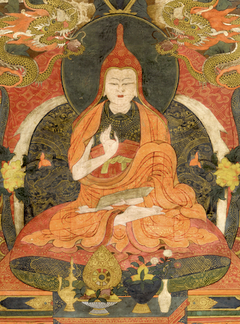
身着僧衣而坐的居·麦彭南嘉嘉措传统画像
居·麦彭南嘉嘉措(1846–1912)。图片由 Himalayan Art Resources 提供,经 Lotsawa House 刊载。

大圆满直指教授 · 私人用藏文锚定工作译本

རྟོགས་ལྡན་རྒན་པོ་རྣམས་ཀྱི་ལུགས་སེམས་ངོ་མཛུབ་ཚུགས་ཀྱི་གདམས་པ་མུན་སེལ་སྒྲོན་མེ།

遣除黑暗之灯

依诸老成就者之传统,直指心面之教授

麦彭绛巴多杰(即居·麦彭南嘉嘉措,1846–1912)造

藏文控制文本 · 作者传记

文本与作者

本页是从现行藏文重新译出的简体中文工作译本。本文的核心,在于区分空白、未定的无分别状态与对心之本性的决定性认清,并说明如何在不虚构隐秘观察者、不把认知变成自我反观对象的前提下,使这种认清稳固。

居·麦彭南嘉嘉措

麦彭(1846–1912)是宁玛派重要学者与通才。Treasury of Lives 将蒋扬钦哲旺波、蒋贡康楚罗卓泰耶与巴楚仁波切等列为其师。

这篇教授

跋文将本教授系于火马年(1906)二月十二日;写作对象是虽不大勤于闻思、却希望修持心面的乡村咒师等人。

源头控制

藏文是正文的唯一控制文本。英文译本与公开评论只用于发现疑点;任何改动都必须重新通过藏文语法、词义与上下文检验。

背景与比对链接:Lotsawa House:麦彭作品 · Lotsawa House 英文见证译文 · Lotsawa House 中文译文索引

关键源位藏文对照(源词转写可视化检查)

这张表要解决什么问题。本简体中文译本此前的任何读者可见层都不含藏文字体,藏文只以罗马转写形式出现在折叠说明里。R11 之所以能够把实际的 sun pa 误记成 skyo ba,并据此改动正文,而且连续数轮的“fresh exact-source readback”自查都没有发现,根本原因正在于此:一个错误的罗马转写在纯中文页面上无法一眼看穿。本项目的英文姊妹译本在每一处争议源位都并排引出藏文,因此同类错误在那里无法隐藏。R14 把同样的结构性保护装置补进中文稿:下表并列藏文原字、本项目存档的罗马转写与当前中文译法,任何一处转写与 PDF 不符都会在字形层面直接暴露,而不再依赖自查报告自称干净。

尚未逐字核验,下一轮必办。下表“藏文”一栏是由本项目已存档的罗马转写机械还原成藏文字体的,尚未与 Lotsawa House 现行五页 PDF 逐字比对。因此它目前只能暴露内部不一致,还不能证明转写本身正确。下一轮必须执行的动作是:逐行对照 PDF 修正本表,并把本框改写为已核验状态。在此之前,本表不得被引用为源头证据。
17 个高风险源位。“中文”一栏引本译本当前用语,便于三方对读。
藏文(待核验)罗马转写(存档)当前中文
རིག་པ་དང་མ་རིག་པrig pa dang ma rig pa明与无明
རིག་པའི་ངོ་བོrig pa’i ngo bo明之体性
ཅི་ཡང་དྲན་མེདci yang dran med一无所忆
བལྟས་པསbltas pas由于……看
སེམས་ངོ་སྐྱོངས་བ་ཡིསsems ngo skyongs ba yis护持心面
གསལ་ཙམ་རིག་ཙམgsal tsam rig tsam仅是明晰 · 仅是能知
ཡིད་ཤེས་ཀྱི་གསལ་ལོ་སྙམ་པའི་ངང་དུ་འཇོགyid shes kyi gsal lo snyam pa’i ngang du ’jog怀着“这是意识的明晰”这一想法而安住
ཡིད་དཔྱོད་ཉམས་ཀྱི་སྤུན་པyid dpyod nyams kyi spun pa“伺察意 · 禅修觉受”的种种糠壳
གནས་ཆ་བརྟན་དགོསgnas cha brtan dgos止分必须稳固
བདེ་གཟར་སྣ་ཚོགས་ཀྱི་གནསbde gzar sna tshogs kyi gnas安适与艰难的种种路段
དེས་མ་སུན་པར་བྱས་ཏེdes ma sun par byas te不要因此厌倦
སྒྲིམ་ལྷོད་རན་པོསsgrim lhod ran pos以张弛适度的方式
རྣམ་ཤེས་རང་སར་བཞག་པསrnam shes rang sar bzhag pas借由将识安置于其自处
རང་བབས་ཡེ་གནས་དང་རང་བཞིན་འོད་གསལ་གྱི་ཞི་ལྷགrang babs ye gnas dang rang bzhin ’od gsal gyi zhi lhag就本初本然安住与自性光明而言,其寂止与胜观
མཚན་མོའི་འོད་གསལ་གྱིས་འཛིནmtshan mo’i ’od gsal gyis ’dzin能由夜间光明摄持
དོན་གྱི་འོད་གསལdon gyi ’od gsal义光明
ཐོས་བསམ་ཕལ་ཆེར་མི་བརྩོན་ཀྱངthos bsam phal cher mi brtson kyang虽不大勤于闻思

使用方式:本表只是核验装置,不是校勘本,也不替代正文。它不主张这些藏文短语的内部关系已被判定;yid dpyod nyams 等仍列为开放岔路。若某行藏文经 PDF 核验后与存档转写不符,应先修正本表并记录,再判断该处中文是否随之需要修复——顺序不可颠倒,因为 R11 的失败正是由错误源词反向驱动正文改写。

可选:翻译方法与源文本说明

本文件生成时状态:REPAIR — REPAIRED AFTER RE-AUDIT — material gates currently pass, no-repair promotion still required. 本 R14 轮承接外部审稿人对 R13 裁定的后续意见,作四项改动:新增“关键源位藏文对照”核验表;摄要段“夜间光明维系”改为“夜间光明摄持”;把 R2–R10 的逐轮记录移入外部审计而在页面保留常效决定与近期轮次;并记录关系中性分隔符的空格脆弱性。R13 已裁定的术语与体例(“明”、“本初觉智”、关系中性中点、“一无所忆”、“伺察意”、稻米譬喻新句式)本轮一律不重开。由于含 material body 与 apparatus 修复,同轮 FINAL 禁止,Deep-Review clean-pass 计数重置为 0/2。

治理冻结(自 R13 起,R14 续用):不再为了 clean-pass 计数、promotion 或状态字段本身改写 HTML。后续无实质修改的 Prompt 6/9 clean pass 与 promotion 只由绑定 exact SHA-256 的外部审计记录承载;只有教学正文、读者装置、DOM、链接/媒体或其他实质错误才生成新修订。

R14 源词可视化:R11 的 skyo ba 伪源词说明了一个结构性问题:自查报告“未发现第二处错误”与自查报告“已作 fresh readback”属于同一类主张,而后者已经失败过一次,因此前者不能单独承担信心。R14 因此不再增加自查轮次,而是加入常设的可视化装置——上方的藏文对照表——使同类错误在页面上可被任何懂藏文的读者当场看穿。该表本身尚待逐字核验,状态已在表内明示。

R14 “摄持”修复:R13 正确拒绝了把 mtshan mo’i ’od gsal gyis ’dzin 改成“持续至夜间光明”——gyis 是工具格,改动会把工具关系变成时间终点。但该裁定只处理了较弱的替代方案。“维系”在现代汉语中偏向“勉力维持不使中断”,容易读成夜间光明在为相续供能;“摄持”是汉译佛典中 ’dzin 在此语域的常用对应词,同样完整保留工具格,而不附带供养/支撑的语感。相续仍是 ’dzin 的对象,夜间光明仍是工具。

控制顺序:藏文是唯一控制文本。英文 R42、Lotsawa House 公开英文、汉译术语见证与既有审计只用于发现疑点;任何正文改动仍必须回到藏文。外部审稿意见逐项分类为 CONFIRMED、PARTIALLY CONFIRMED 或 REJECTED/QUALIFIED,不因来自外部而自动生效。

Batch98 路由:Prompt 6 v6.29 / Prompt 9 v3.23 的注册表已实际读取并校验。现有 MIPHAM_LAMP_R17 注册项的源/目标语言是 Tibetan→English,故本简体中文稿正式以 SOURCE_SPECIFIC_PROFILE=NONE 执行通用门控;未把英文目标 manifest 硬套成中文 profile。其 Mipham 风险清单只作为“到哪些藏文源位重新质疑”的诊断索引,不充当中文替换表或认证依据。

Malcolm 时间顺序:只在讨论同一术语与同一义项时,让较晚的帖子优先。2022 年关于 vidyā 不把自身当作对象的说明,优先于 2011 年较宽松的“rig pa recognized itself”简写;但它不能抹去麦彭此句明写的 bltas pas(“由于/通过看”)。因此正文同时保留非反观防线与修行者的看这一动作。

仍开放的句法岔路:(1)yid dpyod nyams 内部没有明写 dang,正文采用“伺察意 · 禅修觉受”,只确定 yid dpyod 本身的技术词义,不把它与 nyams 的内部关系宣称为校勘定论;(2)第三教授末句的 shes pa 既可作有限动词“了知”,也可名词化为“识/认知”而与后文同作显现主语;(3)正道标志句的双重 ni 仍允许把“证悟容易、少劳苦”读作标志本身。

关系中性分隔符:正文两侧留空格的“ · ”是本工作译本自定义的编辑性关系中性分隔符,不等同于人名内部无空格的间隔号(如“居·麦彭”)。本轮不改成“、”,因为现代汉语规范中的顿号会明确标示并列/列举关系,而这些相邻藏文源位恰恰未必有 dang 或其他足以锁定关系的标记。已知脆弱性:两种用法的区别完全由空格承载,而空格会被换行、复制粘贴与部分阅读器的排版规则破坏。因此凡引用本译本相关段落者,必须回到本页原始 HTML 确认分隔符类型,不可依赖转贴文本。

编辑标记:礼敬、主题、引文、摄要、跋文等分节标题属于导航性编辑增设,均带 data-editorial-heading="true";三条编号教授标题则取自各段原文收束句,并另标 data-source-basis="source-closure"。所有补足语均用可机械移除的 data-editorial-gloss="true" 标记。

礼敬

礼上师与文殊智慧萨埵。

甚深道之力

不须广泛修习闻思,
依窍诀传统护持心面,
一位普通的乡村咒师,便能以少许艰辛,
抵达持明之位——此乃甚深道之力。

此外,当自己的这颗心任其本然安住,什么也不想,并在其中护持忆念之流时,便会生起一种无记等舍的识,昏黑而懵然。

1. 破开无明之卵壳

只就尚未生起任何能辨别此、辨别彼的胜观而言,诸上师便将它名为无明。就不能辨认并说出“它是这样,这就是它”而言,名为无记。由于说不出安住于何处、曾想过什么,故名为寻常等舍。其实,那是在一切基的状态中,平常地任其自处而住。

虽须依靠这般安住方法而生起无分别本初觉智,但这种尚未生起了知自身本性(藏 rang ngo的本初觉智的状态,并非禅修正行。如《普贤愿文》所说:

一无所忆,懵然一片;
这正是无明,是迷乱之因。

由于心经验着这种一无所忆、毫无动念的懵然之识,又由于自然地看那两者本身(将这般经验作为所知而知者,与无所思而安住者),离分别动念的(梵 vidyā;藏 rig pa便无内无外、通透澄然,如同晴空。

所经验者与能经验者虽无二,自己却亲自断定自身本性。若生起“除此之外再无任何别的”这一念头,那么,由于思与言都无法说它“是如此”,便可安立“离边、不可言说的本来光明”与“明”这些名称。这是因为,认清自身本性的本初觉智生起,懵然的黑暗随之澄清;如天亮后看见屋内一般,对自心之法性生起了定解。

这称为破开无明之卵壳的窍诀。

2. 斩断有之网

如此证悟时,便知这般法性的本性自然而然、本来安住,不由因缘和合而成,在过去、现在、未来三时中也无迁变;并且,丝毫也观察不到另有任何异于它、名为“心”者存在。

先前那昏黑懵然的状态虽也不可言说,却是因为不知道该说什么,故未作出决定。明之体性虽同样不可言说,却已对这不可言说之义断尽疑惑、作出决定。两者的不可言说方式有极大差别,如盲人与有眼者;因此,一切基与法身的分际,也在此要点中收摄。

所以,所谓“寻常之识”“不作意”“离言”等等,各有真实与不真实两种。若确定“词相同而义超胜”这一要点,便会获得甚深法的实证体验。

在心面的境界中任其本然安住时,有些人把“仅是明晰 · 仅是能知”当作所要护持者,便怀着“这是意识的明晰”这一想法而安住。有些人则把心系在一片空荡上,仿佛识已经空掉。然而,两者都是对意识层面的能所觉受的执著:一者是明晰与执持明晰者,另一者是空与执持空者。

此时,应察看那股绷紧的、忆持着的识之相续所处的状态:明晰及执持明晰者,空及执持空者。拔除那执著能所之识的所依桩,对赤裸、敞然、明空、离中边的本然状态作出决定。若生起澄澈明朗,便给它安立“明之面”这一名称:脱离带有执取之觉受外壳的“明 · 本初觉智”,赤裸显露。

这称为斩断有之网的窍诀。

3. 安住于如虚空般的平等性

同样,明如一粒稻米,脱离“伺察意 · 禅修觉受”的种种糠壳;应当经由本然安住、自明的法性之门予以认出。

仅仅知道明的性状还不够;在该境中串习的止分必须稳固。因此,让识任其本然安住,同时不散乱地护持忆念之流,至关重要。

如此护持时,有时是无法分辨何者为何的愚钝无分别;有时是通透的无分别,但胜观的澄明分尚未显出;有时是带贪著的乐受,有时是不带贪著的乐受;有时是带执取的种种明晰觉受,有时则是澄明、无浊而离执。

有时是粗涩而不悦的觉受,有时是柔和悦意的觉受;有时由于追随极其躁动的分别念,禅修被冲散;有时因未能分开昏浊与澄明而处于混浊状态,等等。从无始以来串习的分别念,以及业风的各种波涛,都会无定准、无可限量地生起。这如同走上长路,会遇见安适与艰难的种种路段。因此,无论显现什么,都不作特意执持,而护持自己的道。

尤其在尚未熟习、正值“动之觉受”时,种种分别念如火燃烧。不要因此厌倦。以张弛适度的方式护持,不令相续中断;因此,如“得”等后续觉受便会依次出现。

此时,一般而言,在依上师窍诀辨析明与无明、一切基与法身、识与本初觉智,并从经验上对认清之事建立把握之后,当护持这份认清时,应以这个窍诀为主:如水不经搅动便会澄清,借由将识安置于其自处,其法性显为自生本初觉智。

不要想着“我所修的是识,还是本初觉智?”而增广取舍的审察,也不要增广由经籍理解而生的纷繁思虑;这样会稍微遮蔽寂止与胜观二者。

当串习以寂止——即本然安住时稳定的忆念相续——与胜观——即了知自面为自明——自然相联的方式稳固下来,便会了知:就本初本然安住与自性光明而言,其寂止与胜观自本初即不可分;这时,自生本初觉智 · 大圆满密意便会显现。

这就是安住于如虚空般平等性的窍诀。

佐证引文

同样,具德萨拉哈谈到安住方法时说:

彻底舍弃思与所思之后,
当如幼童,无思而住。

——萨拉哈

他又说:

若专注上师之语而极力勤修——

——萨拉哈

也就是说,若具足指示明之窍诀,则:

俱生〔本性〕必将生起,无有疑惑。

——萨拉哈

摄要

如其所说,从本初起,与自心俱生的“心之法性 · 明 · 自生本初觉智”便会生起;它与一切法的法性无别,因而也是本来义光明

因此,这种任其本然安住,并护持了知自面的明,或心之体性,或法性的方式,乃百要归一的窍诀。恒常应护持的,也正是它。

串习的尺度,是这一相续能由夜间光明摄持。正道的标志,是信心、悲心与智慧自然增长;伴随这种增长,可由亲身经验得知证悟容易且少费力。至于它的甚深与迅速,则可将证悟之量,与那些以极大勤苦修持而投入此道或他道者的证悟之量相比较,由此确定。

至于修习自心光明所得之果:当围绕所求果位的分别念之障及其习气之障自行消净时,二智无勤而增广;由此获得本初恒常之域,三身自然圆满。

甚深。秘密。三昧耶。

跋文

火马年二月十二日,为那些虽不大勤于闻思、却希望修持心面的乡村咒师等,麦彭绛巴多杰依照普通老成就者的经验直授中所用的易懂法语,编排了这篇甚深教授。善哉。吉祥。


修订与审计要点

关于本记录的范围:R2–R10 的逐轮细目已移入与各该 exact SHA 绑定的外部审计记录。移出的条目均已被后续轮次取代至少一次(多数两次),其保留价值在于历史可追溯性,而非当前判定;把它们留在页面上只会使读者难以看出哪些结论仍然有效。下面第一组是当前仍然有效的源位/术语决定,不按轮次编排;第二组是近期轮次。若需查阅 R2–R10 原始措辞,请调取外部审计。

一、当前有效的源位与术语决定

  • rig pa =“明”:核心理由是 rig pa / ma rig pa 对应 vidyā / avidyā,汉译佛教传统已有“明/无明”的成对表达。拒绝“明分”,因为它破坏这一对举并加入源外“分”。“明”不指背景觉知或见证者。
  • ye shes =“本初觉智”:“本智”是已建立的汉译异名,但不构成“本初觉智即错误”的证明。现有 AtR register 持续使用“本初觉智”,按 anti-churn 保留。
  • yid dpyod =“伺察意”:采用汉译量论/心类学既有技术词,取代项目自造的“臆度认知”。与相邻 nyams 的内部关系仍为开放岔路。
  • rang ngo 不作全局替换:依各处结构分别译作“自身本性”“自面”等;首处附可移除转写标记。
  • bltas pas 的“看”:明写的修行者动作予以保留,不改成自我反观结构,也不像被批评的英文被动式那样删掉动作。“自然地看那两者本身”同时保留 babs kyis 的方式与两个 mkhan 角色。
  • mtshan mo’i ’od gsal gyis ’dzingyis 为工具格,相续是 ’dzin 的对象。现译“能由夜间光明摄持”(R14 由“维系”改)。不改成“持续至夜间光明”,那会删除工具关系;不擅加“睡眠”。
  • don gyi ’od gsal =“义光明”:保留与“喻光明”相对的实际层面,不压平为泛称“光明”。
  • gnas cha =“止分”:此处是三摩地中安住之稳定面的技术成分,非“安住之分”式的过度拆解;brtan dgos 独立落在“必须稳固”。
  • bde gzar 保守化:译“安适与艰难的种种路段”,不虚构“平坦/陡峭”的地形词对。
  • 共享 zhi lhag 词头:“就本初本然安住与自性光明而言,其寂止与胜观……”以回指属格保留两前项共同支配 zhi lhag,不拆成两个独立属格。
  • srid pa’i dra ba =“有之网”:使读者能回到 srid pa,不补入原文没有的 ’khor ba
  • ci yang dran med =“一无所忆”:该局部语境成立,保留 dran 词族联系,未改为较僵硬的“无有忆念”。
  • 过程化禁令:de’i chos nyid ye shes rang byung du gsal ba 译“其法性显为自生本初觉智”,不写成识“发展为”或“转化为”本初觉智。
  • 作者署名:Lotsawa House 正文署 Mipham Jampal Dorje,同页画像标 Ju Mipham Namgyal Gyatso,二者为同一人异名;中文合并为“麦彭绛巴多杰(即居·麦彭南嘉嘉措,1846–1912)造”。
  • 编辑标记:所有分节标题机器可识别;补足语均可机械移除,移除后底层译句仍成立。

二、近期轮次

  • R11 skyo ba 伪源词(已失效):R11 把“动之觉受”处控制源词识别为 skyo ba,据此将“不要因此厌烦”改为“不要因此灰心”。R12 核对后确认该处实为 des ma sun par byas te。R11 的源词转写与由此建立的修改理由均不再控制。此条永久保留为失败记录。
  • R12 sun pa 修复:直接词汇证据把 sun pa 的中心义域放在 weary/tired of、irritated/annoyed、fed up;正文改为“不要因此厌倦”。公开英文“discouraged”仅作语境见证,不反向决定藏文词形。
  • R13 源转写抽查:接受“skyo ba 伪源词应反向触发其他转写抽查”的外部批评,对 23 个高风险藏文短语重新回到现行藏文页面/PDF 抽查,未发现第二个当前生效的转写错误。R14 限定:该结果不足以单独承担信心,理由见下条。
  • R13 其余修复:补入“明/无明”术语理由;yid dpyod 改用“伺察意”;重排稻米譬喻句以减轻单字“明”的句法负荷;合并作者署名;把 build-status 段落移出正面术语面板。
  • R13 未采纳的外部建议:“、”替换关系中性中点(顿号会标示并列关系,非关系中性);“本智”强制替换“本初觉智”(异名不等于原译错误);“持续至夜间光明”(会反转工具格);“无有忆念”(无强制语义依据)。R14 维持这四项裁定。
  • R14 源词可视化装置:新增“关键源位藏文对照”表,为 17 个争议源位并列藏文字体、存档罗马转写与当前中文。理由:自查报告“未发现第二处错误”与已经失败过的自查报告“已作 fresh readback”属同一类主张,不能单独承担信心;而中文页面此前不含任何读者可见藏文,正是 R11 错误得以隐藏的结构条件。该表的藏文栏尚待逐字核验,状态已在表内明示,核验为下一轮必办事项。
  • R14 “摄持”修复:“维系”偏向“勉力维持不使中断”,易读成夜间光明为相续供能;改用汉译佛典中 ’dzin 在此语域的常用对应词“摄持”,工具格与对象关系不变。此为本轮唯一教学正文改动。
  • R14 修订记录归档:R2–R10 细目移入外部 exact-hash 审计,页面保留常效决定与近期轮次;无判定被撤销。
  • R14 分隔符脆弱性记录:关系中性“ · ”与人名间隔号“·”的区别完全由空格承载,而空格会被换行、复制粘贴与部分阅读器排版破坏。已在方法说明中明示:引用相关段落须回到原始 HTML 确认。
  • R14 当前生成状态:REPAIR — REPAIRED AFTER RE-AUDIT — material gates currently pass, no-repair promotion still required.含一处教学正文改动与多处装置/记录修复;同轮 FINAL 禁止,Deep-Review clean-pass 计数重置为 0/2。下一关:先完成藏文对照表的 PDF 逐字核验,再对确切 R14 SHA 执行 Clean Pass 1/2。

版本:简体中文藏文锚定工作译本 R14 · 控制文本:Lotsawa House 现行藏文页面/五页藏文 PDF · 审查框架:Batch98 Prompt 6 v6.29 / Prompt 9 v3.23 · 待办:藏文对照表逐字核验 · 构建/QA 状态与审计细节见上方折叠说明及与本精确哈希配套的外部审计记录。

返回页首 ↑

A Lamp to Dispel Darkness: An Instruction Pointing Directly to Mind’s Face, According to the Tradition of the Old Realized Ones

Sunday, August 02, 2026 Open post →
By
Traditional image of Ju Mipham Namgyal Gyatso seated in monastic robes
Ju Mipham Namgyal Gyatso (1846–1912). Image courtesy of Himalayan Art Resources via Lotsawa House.

Dzogchen pointing-out instruction · Private Tibetan-controlled working translation

རྟོགས་ལྡན་རྒན་པོ་རྣམས་ཀྱི་ལུགས་སེམས་ངོ་མཛུབ་ཚུགས་ཀྱི་གདམས་པ་མུན་སེལ་སྒྲོན་མེ།

A Lamp to Dispel Darkness

An Instruction Pointing Directly to Mind’s Face, According to the Tradition of the Old Realized Ones

By Mipham Jampal Dorje · Ju Mipham Namgyal Gyatso (1846–1912)

Controlling Tibetan text online · Author biography

Text and Author

This page presents a Tibetan-controlled working translation of Mipham’s concise Dzogchen instruction on distinguishing blank, indeterminate non-conceptuality from decisive recognition of mind’s nature, and on stabilizing that recognition without reifying a hidden observer or turning cognition into reflexive self-observation.

Ju Mipham Namgyal Gyatso

Mipham (1846–1912) was a major Nyingma scholar and polymath. The Treasury of Lives lists Jamyang Khyentse Wangpo, Jamgön Kongtrul Lodrö Tayé, and Patrul Rinpoche among his teachers.

The text

The colophon dates this instruction to the twelfth day of the second lunar month of the Fire Horse year (1906). It was composed for village mantrikas and others who did not exert themselves much in hearing and reflection but wished to practice mind’s face.

Source control

The Tibetan text is the controlling authority. Public English translations are used only to locate possible problems or variants; any accepted change must survive a fresh check of the Tibetan itself.

Background and source links: Lotsawa House: Mipham series · Lotsawa House English witness · B. Alan Wallace comparison witness

Optional: Translation Method and Source-Critical Notes

Batch97 discipline: this round applies Prompt 6 v6.28 and Prompt 9 v3.22 together with Prompt T v1.19 and the Mipham R17 source-specific fixture manifest. Each active fixture is source-revalidated before execution; superseded fixtures remain disabled; comparator-triggered candidates are reopened against the Tibetan before acceptance; fluent English is not majority evidence.

Prompt 6 execution evidence: Batch97 source-specific guardrail execution completed: source loci revalidated; active fixtures executed positively and negatively; superseded fixtures disabled; expert claims classified; context checked; source roles/relations/clause scope/paired members/anaphora verified; exact-occurrence contamination scanned; lexical compounds tested before relation-neutral fallback; source-absent intensification and false collocation donors rejected; and exact-artifact PASS/FAIL evidence recorded.

Prompt 9 after-fluency evidence: Batch97 relational-fidelity after-fluency gate completed: active fixtures were rechecked; reflexive/self-knower, role, epistemic, clause, relation, occurrence-contamination, intensifier, completeness/scope, label/title, terminology-panel, and editorial-supplement regressions were scanned in the exact artifact without harmonizing targets to comparators.

Prompt T execution evidence: Batch97 Prompt T execution refinement applied: source-specific fixtures were source-revalidated before activation; superseded fixtures were disabled; expert evidence type was separated from lexical authority; source roles/relations/clause scope were recorded; anti-reflexivity preserved legitimate source agents and objects while rejecting self-objectification; adjacency passed compound testing before relation-neutral fallback; exact-occurrence contamination was checked; and editorial supplements used the canonical removable marker.

Batch97 fixture-governance qualification: four inherited manifest prose snippets are stale at the lexical/relation/head-word/clause level and are not allowed to regress this artifact. MIPHAM-39 remains valid for its cross-locus anti-contamination rule, but its earlier “one’s own state” wording at rang ngo rig pa’i ye shes is superseded by the later source-revalidated MIPHAM-61 requirement “one’s own nature.” MIPHAM-41 is invalid at its claimed “introduction locus”: exact-source revalidation shows rang ngo ’phrod pa’i ye shes shar bas, not an ngo sprod construction, so R21 restores recognition/realization language at this occurrence and preserves genuine introduction terminology only where the Tibetan actually has ngo sprod. MIPHAM-48 remains valid for the dharmatā → self-originated pristine consciousness relation, but its older “principal point of practice” publication form is superseded by MIPHAM-62, which removes the source-absent head noun and requires “the principal one.” R31 further refines the inherited MIPHAM-48/MIPHAM-53/MIPHAM-62 target string “clear as self-originated pristine consciousness”: the fixture constraints remain valid, but that English realization is now “manifest as self-originated pristine consciousness” because “clear as” has an unintended comparative parse in English while source-local gsal ba independently supports manifestation/appearance senses. MIPHAM-57’s core separation of pair-analysis from recognition-confidence remains valid, but its inherited publication string is stale because it adds “your own” to nyams myong gi steng nas and turns gdeng du byas nas ... skyong dus into a free target imperative; R22 source-revalidates and refines that fixture behavior.

Exact-artifact Strict QA evidence: Batch97 fixture/body-apparatus/private-study/handoff QA executed on the exact artifact. Source-revalidated fixture assertions passed at their valid loci; MIPHAM-57’s stale inherited publication-form wording was quarantined rather than counted as a positive expected hit, while its core role-separation assertion passed; superseded/invalid fixture wording did not control the body; editorial supplements were reversible; private-use notice concepts were verified when enabled; and artifact/handoff round-status metadata matched.

Render disclosure: exact-R42 structural validation passed with zero HTML parse errors, no duplicate IDs or broken ARIA references, balanced scoped CSS braces, complete image metadata, safe external-link relations, and the same 44 controlled teaching-body text nodes as R41. A fresh browser render could not be executed in this workspace because the installed Playwright package has no browser executable; the prior R41 screenshots are not reused as certification for R42. Remote image/font availability and visual layout therefore remain uncertified in this pass.

R38 source-transcription / epistemic repair — REJECTED AND SUPERSEDED IN R40: R38 incorrectly asserted that the second instruction opened with དེ་ལྟར་ངོས་ཟིན་པ་ན་ (de ltar ngos zin pa na) and changed “realized” to “recognized.” Fresh exact-source revalidation in R40 shows that this was a cross-locus transcription error. The controlling locus is དེ་ལྟར་རྟོགས་ཚེ་ (de ltar rtogs tshe), so realization-family language is required here. The actual ngos zin occurrence appears later in the third instruction at ཆོས་ཉིད་རང་བབས་རང་གསལ་གྱི་སྒོ་ནས་ངོས་ཟིན་པར་བྱའོ།, where the body already says “should be recognized.” R40 restores “When it is realized in this way” at the rtogs locus and explicitly rejects the proposed R38 MIPHAM-71 fixture.

R39 HANDOFF-01 post-final synchronization repair: the external R38 Deep-Review Clean Pass 2/2 handoff promoted the exact R38 SHA to REVIEWED FINAL / PUBLISHABLE while the exact promoted HTML remained internally marked STATUS: REPAIR, still identified itself as the thirty-eighth repair pass, and ended its current revision ledger with “Status after R38: REPAIR.” Batch97 HANDOFF-01 requires current artifact identity, status, handoff, revision endpoint, and package metadata to agree, and Batch93/94 treat metadata/report/render/package corrections as material. R39 therefore synchronizes the live artifact to a new repair round without changing any controlled teaching-body wording. Same-pass FINAL promotion is prohibited; a later exact-R39 no-material-change pass is required.

R40 de ltar rtogs tshe exact-source / cross-locus contamination repair: independent source-order revalidation found that the R38/R39 second-instruction wording rested on a false Tibetan transcription. The actual source has དེ་ལྟར་རྟོགས་ཚེ་ (de ltar rtogs tshe), while ngos zin occurs later in the third instruction. Prompt 6’s source-transcription, exact-occurrence-independence, and cross-locus-contamination gates therefore require restoration of realization language at the second-instruction locus. This is a one-node teaching-body repair, not a global rule that every rtogs must receive one fixed English gloss.

R41 colophon phal qualifier-attachment repair: the controlling colophon reads རྟོགས་ལྡན་རྒན་པོ་ཕལ་གྱི་ཉམས་མྱོང་དམར་ཁྲིད་ཀྱི་ཆོས་སྐད་གོ་བདེ་བ་ (rtogs ldan rgan po phal gyi nyams myong dmar khrid kyi chos skad go bde ba). R40’s “the old realized ones in general” kept phal near the correct group but changed its grammatical function into a distributive English adverb. Here phal sits inside the genitive noun phrase before gyi; independent lexicography supports the ordinary/common family, and both comparison witnesses independently take the phrase as ordinary/typical old realized ones. R41 therefore reads “the direct experiential guidance of ordinary old realized ones.” This is occurrence-specific: it does not impose phal = “ordinary” mechanically at other constructions such as phal cher or phal mo che.

R42 report adjudication — accepted body repairs: fresh readback of the controlling Tibetan confirms the overt bltas pas act, rang gar, the discourse/additive particles de yang and yang, enumerative sogs, and the causal closure pas so. It also supports “actual” for technical don gyi and the pramāṇa value “presumptive cognition” for yid dpyod. The nighttime sentence is clarified without making luminosity the object of ’dzin or loosening mtshan mo’i ’od gsal into a temporal phrase.

R42 babs kyis bltas pas role repair: R41’s passive “are directly observed in the mind” deleted the source-explicit act of looking and added the unanchored location “in the mind.” R42 restores “one looks naturally at those very two,” retaining both mkhan roles while the following source clause still states that the object of experience and experiencing agent are not two. This is neither an instruction for awareness to take itself as an object nor a deletion of an overt Tibetan predicate.

Malcolm chronology rule applied locally: where supplied posts address the same issue, the later statement controls. Malcolm’s August 2022 explanation explicitly rejects vidyā taking itself as an object and therefore supersedes the looser 2011 shorthand “rig pa recognized itself” for this reflexivity question. It does not supersede a different source fact—the overt bltas pas in Mipham’s sentence—so R42 preserves both the anti-reflexive safeguard and the practitioner’s act.

R42 rang ngo identity without forced harmonization: the report correctly identifies a reader-recoverability problem but not a license for global substitution. The first teaching-body occurrence now carries a canonical removable (rang ngo) marker; later “nature” and “face” renderings remain controlled by their exact local constructions.

R42 yid dpyod lexical repair, relation still watch-listed: “conceptual analysis” is replaced by “presumptive cognition,” the established pramāṇa value documented by the Stanford Encyclopedia of Philosophy and the Study Buddhism glossary. Because yid dpyod nyams still lacks an overt dang, this lexical repair does not claim that the internal relation is text-critically settled.

R42 qualified no-change — srid pa: the claim that “cyclic” belongs only to ’khor ba is too categorical. 84000’s authority record for srid pa includes “cyclic existence,” “existence,” and “becoming,” and its Summary of Empowerment glossary explicitly maps srid pa to “cyclic existence.” The current instruction title is therefore defensible and remains unchanged; no global equation is inferred.

R42 documented parse forks without forced rewriting: the finite reading of shes pa before rang byung gi ye shes … ’char bar ’gyur remains grammatically viable, while a nominal reading in which the primordially indivisible śamatha-vipaśyanā cognition dawns is also live. Likewise, the double ni in the authentic-path sentence permits an alternative attachment in which ease and little hardship are the sign. Neither alternative is compelled strongly enough to displace the present body, so both remain explicit audit forks.

R42 editorial-heading disclosure: every sectional heading in the translated teaching body is supplied navigation and now carries data-editorial-heading="true". The three numbered instruction labels are based on source closure sentences and are separately marked data-source-basis="source-closure"; the homage, thematic, quotation, condensed-point, and colophon headings are marked as fully editorial navigation.

R42 micro-finding qualification: de yang, additive yang, sogs, and causal pas so now receive overt English representation. Saraha’s connective zhing is already represented by the quotation sequence and “He also says”; adding a freestanding “and” would duplicate that relation, so no body change was made at that point.

Private-use / attribution safeguard: the private-use and no-authorization language above is adapted from the supplied Self-Liberation reference page. It is a status notice about this independently prepared working translation, not source content from Mipham. Comparison or terminological influence never transfers authorship, review responsibility, or endorsement to the people or institutions cited.

Release-critical Malcolm safeguard — source roles retained, lexical relations source-revalidated: the user-supplied Malcolm Smith discussion is treated as a named expert diagnostic witness alongside the displayed Tibetan, not as a replacement controlling source. It explicitly distinguishes the experience of nonconceptuality as the object being cognized from any idea that consciousness turns around and takes itself as its own object. The controlled body therefore preserves both source-explicit mkhan roles and “as an object” specifically for the experience; the next source clause remains explicit that the object of experience and the experiencing agent are not two. Later rounds independently revalidated three different rang ngo families rather than harmonizing them: rang ngo rig pa’i ye shes is “the pristine consciousness of knowing one’s own nature”; rang ngo ’phrod pa’i ye shes shar bas is now represented by “with the arising of the pristine consciousness of recognizing one’s own nature”; and the still later rang ngo shes pa’i rig pa remains “rigpa of knowing one’s own face.” The structural Malcolm safeguard does not authorize replacing any of these exact Tibetan relations with another. No instruction to “turn attention back” toward an inner awareness is admitted.

R18 Malcolm-locus clause architecture — passive realization superseded in R42: the supplied forum screenshot correctly helped retain the dazed-state experience and two mkhan roles as causal/participial supports for the main statement that rigpa is pellucid, so R18 did not revive R17’s target-added “Thereupon.” R42 preserves that architecture but supersedes “direct observation” as a passive English realization because the Tibetan has an overt bltas pas act.

Inherited R8/R9 repairs retained except where later source revalidation supersedes them: R25 supersedes the old R8/R9 wording “natural state” at de’i bab la ltas: plain bab remains the state-locus, while the earlier correction that the phrase does not mean looking at its “settling” remains valid. R32 further restores the source-explicit nominal shes pa within the immediately following shes pa dran ’dzin gyi rgyud bring nge ba phrase, now rendered as a tense continuum of recollectively fixating consciousness. In the third instruction, R34 phrase-level lexical validation treats gnas cha as the attested stability/steadiness compound rather than decomposing it as an “abiding aspect,” so gom pa’i gnas cha brtan dgos is represented as the stability of familiarization being firm; las rlung gi rba rlabs remains waves of karmic winds; and the single g.yo ba’i nyams (“experience of movement”) with thoughts blazing like fire remains one experience rather than two. The Saraha sequence also remains attached to the source’s method-of-resting syntax. R10 superseded R8/R9’s four-independent-designation treatment of mtha’ bral brjod bral gnyug ma’i ’od gsal dang rig pa: the explicit dang precedes rig pa, while the compact pre-dang chain functions around gnyug ma’i ’od gsal. R11 further repairs the literalistic English “free from expression”: brjod bral is rendered “beyond expression.” R12 makes the source’s overt dang boundary visually unambiguous by treating the two designations as “fundamental luminosity, free from extremes and beyond expression” and “rigpa.”

Rejected comparator-driven candidate: one public English witness gives the second non-conceptual experience as though vipaśyanā’s clarity were present. The controlling Tibetan contains ལྷག་མཐོང་གི་དྭངས་ཆ་མ་ཐོན་པ་, explicitly “the lucidity of vipaśyanā has not emerged.” The negative reading is therefore retained; no Tibetan emendation is made.

No-emendation lexical check: the third instruction’s སྤུན་པ་ (spun pa) was rechecked because it can look like a corruption of shun pa. Tibetan lexicographic evidence independently attests spun pa for the outer husk/chaff of grain. The body’s “husks” language therefore does not require silently changing the supplied Tibetan spelling.

Lexical-compound repair: the difficult first-instruction phrase འགྱུ་དྲན་ (’gyu dran) is independently attested as a discursive-thought / mind-movement expression. R8’s “movement and recollection” mechanically split the compound into two coordinated items. R9 therefore renders it source-locally as “discursive thought”. This also brings execution back into compliance with Batch96 Prompt T, which already names ’gyu dran as a rare-compound validation fixture.

Source-explicit “own face” safeguard: the condensed point retains the Tibetan’s རང་ངོ་ཤེས་པའི་རིག་པ་ (rang ngo shes pa’i rig pa) and R13 retains “rigpa of knowing one’s own face” rather than “rigpa that recognizes its own face.” This keeps the source-explicit rang ngo phrase while avoiding an English subject–reflexive-object construction that can make rigpa sound like a self-knowing inner entity. The phrase remains distinct from the second instruction’s nominal label རིག་ངོ་ (rig ngo), “the face of rigpa.” Neither occurrence is imported as “awareness of awareness,” svasaṃvedana, or consciousness turning back to cognize itself as an object; the earlier myong bya / myong byed passage constrains that reading.

R9 source-order repairs: the opening mun nag thom me ba state is now rendered only as a “dark, dazed consciousness,” removing the added “dull and blank”; ’gyu dran is repaired from the false split “movement and recollection” to the attested compound sense “discursive thought”; the source’s snyam pa byung na is preserved as a thought arising rather than prematurely promoted to certainty; de las gzhan du gyur pa’i sems again marks a “mind” other than that dharmatā rather than making an unrestricted claim about mind; bsgom gtor ba keeps meditation itself as what is scattered, without the added “outward discursivity”; dwangs gsal rnyog med ’dzin bral is “lucid clarity, unsullied and free from grasping,” without added vividness; the compact rang byung gi ye shes rdzogs pa chen po’i dgongs pa and sems kyi chos nyid rig pa rang byung gi ye shes sequences are kept relation-neutral at unresolved internal boundaries rather than converted into unsupported English apposition; rang gi rang bzhin is not doubled into “one’s own nature for oneself”; and the final gdod ma’i gtan srid clause no longer adds an unsupported “one’s own.”

R10 grammar-and-role repairs retained: the opening source’s lack of sogs, both members of the ’di ’dra / ’di yin identification pair, ma rig as “ignorance,” the compact designation structure, phrase-level sgra mthun don ’phags / dgongs nyams handling, unstrengthened yid shes, the tense dran ’dzin continuum, the nominal rig pa / ma rig pa pair, and the instrumental role of nighttime luminosity all remain intact.

R11 nominal-label / lexical-collocation repairs: དེ་ལ་རིག་ངོ་ཞེས་པའི་མིང་འདོགས་ explicitly says that the arising lucidity is “given the name the face of rigpa.” R10’s “this is called recognizing rigpa’s own face” turned a nominal label into a recognition event and inserted rang (“own”), which is absent at this occurrence. This is kept distinct from the later source-explicit rang ngo shes pa’i rig pa. R11 also removes the inherited “seizes the stronghold” collocation from gdod ma’i gtan srid zin: lexicographic sources give gtan srid a permanent-domain / everlasting-domain semantic range and zin a gain/hold sense, so the body now reads “gains the primordial permanent domain.” This is source-local and is not promoted to a universal substitution rule.

R12 opening / scope / predicate repairs, lexically refined in R15: the opening verse preserves the instrumental structure of sems ngo skyongs ba yis (“by sustaining mind’s face”). R12 removed the unsupported emphatic “even”; R15 separately restores the source-explicit ordinary/common force of phal mo che, yielding “an ordinary village mantrika.” In the following prose, btang snyoms lung ma bstan gyi shes pa is kept as one dark, dazed consciousness qualified by indeterminate equanimity. The first ignorance-label sentence also restores de’i cha nas (“insofar as / in that respect”), preventing a local diagnostic label from being overstated as an unrestricted identity claim.

R12 dharmatā / adjacency / gateway repairs: the first sentence of the second instruction is reparsed as the nature of such dharmatā being naturally present from the very beginning, uncompounded by causes and conditions, and changeless across the three times; the prior separate “unconstructed” predicate had no independent source anchor. The pair gsal tsam rig tsam is now presented relation-neutrally as “mere clarity · mere cognizance,” removing the unsupported English “or.” In the third instruction, chos nyid rang babs rang gsal gyi sgo nas now governs the manner/gateway of recognition: rigpa is recognized through naturally settled, self-clear dharmatā, rather than being silently asserted “as dharmatā.”

R12 conditional / supplement / colophon repairs: the second Saraha line now retains the source’s conditional na (“If one focuses…”). Because lhan cig skyes pa is nominally elliptical, the supplied English noun in “co-emergent [nature]” is bracketed as an editorial supplement rather than presented as overt Tibetan. The final obscuration sentence makes the scope of the concluding sgrib pa explicit over conceptual thoughts and their habitual tendencies, and the colophon now keeps phal attached to the old-realized-ones group without forcing a numerical “most.”

R13 historical cross-locus lesson, subsequently source-refined: R13 correctly established the anti-contamination principle but its lexical labels at two loci were later superseded by exact-source checks. R17/MIPHAM-61 replaced the earlier expert-witness “knowing one’s own state” with source-local “knowing one’s own nature” at rang ngo rig pa’i ye shes. R21 now supersedes R13/R20’s treatment of the next locus as “introduction”: the Tibetan reads rang ngo ’phrod pa’i ye shes shar bas, so this occurrence belongs to the recognition/realization family, not ngo sprod. The still later rang ngo shes pa’i rig pa remains a separate knowing-one’s-own-face occurrence. Separately, R14 correctly restored the Tibetan’s explicit དེའི་ཆོས་ཉིད་ཡེ་ཤེས་རང་བྱུང་དུ་གསལ་བའི་མན་ངག་ relation after R13 had deleted it; R15 keeps that relation without making the pith instruction an English causative agent that itself “clarifies” dharmatā.

R14 clause-scope / antecedent repairs: the opening bzhag nas ... bskyang ba de’i tshe construction is no longer turned into a target-language imperative, and source-absent “deliberately” is removed. In bzhag thabs de ’dra ba la brten nas ... de ’dra bsgom gyi dngos gzhi ma yin, singular “method of resting” is restored and the state lacking the relevant pristine consciousness—not the method—is the subject of “not the main meditation.” In the first instruction, decisive ascertainment precedes the conditional snyam pa byung na, and nges shes is again “certainty.” In the second instruction, yod par ma dmigs retains explicit existence scope. At the end, R14 repaired the instrumental role in mtshan mo’i ’od gsal gyis ’dzin; R16 further preserves mtshan mo’i ’od gsal itself as the constituent “nighttime luminosity,” yielding “sustained through nighttime luminosity.” The separate ’bras bu thob rgyu’ang de’i steng gi rnam rtog is read by immediate antecedent as conceptual thoughts concerning the fruition to be attained; Wallace is used only as a diagnostic witness for that latter parse.

R15 lexical / trailing-scope / technical-compound repairs: grong sngags phal mo che zhig now keeps the source-explicit ordinary/common force of phal mo che without reintroducing the unsupported emphatic “even.” In de’i chos nyid ye shes rang byung du gsal ba’i man ngag, gsal ba is kept descriptive rather than turning the following man ngag into an English causative agent. In the condensed point, R15 treated the trailing bskyangs tshul as governing the coordinated practice complex; R17 supersedes that scope decision after rechecking constituent completeness: rang babs bzhag pa is already a complete first conjunct, while the following alternative complex is what is sustained. Finally, mkhyen gnyis is restored as the established nominal technical expression “the two knowledges,” not stylistically verbalized as “twofold knowing.”

R16 reflexive-role / confidence-attachment / nighttime-luminosity repairs: in rang gi rang bzhin rang gi kho thag chod, the repeated reflexive material is no longer flattened into a single English possessive; the body now says that one “personally reaches decisive certainty about one’s own nature.” In rig pa dang ma rig pa ... kyi dpyad par bla ma’i man ngag gis nyams myong gi steng nas ngo ’phrod pa gdeng du byas nas, analysis/distinction of the three technical pairs is kept separate from establishing confidence in recognition on the basis of experience. And mtshan mo’i ’od gsal gyis ’dzin now retains “nighttime luminosity” as the source constituent while preserving the instrumental gyis: “sustained through nighttime luminosity.” Two no-change checks are also recorded to prevent future overcorrection: source-explicit tha mal btang snyoms remains “ordinary equanimity,” not comparator-driven “common equanimity,” and the idiomatic “clear and empty” at gsal stong is retained because that expression is independently attested as a lexical clarity/luminosity–emptiness compound; relation-neutral punctuation is not imposed mechanically once compound status is verified.

R17 own-nature / expert-witness lexical refinement: the first-instruction phrase རང་ངོ་རིག་པའི་ཡེ་ཤེས་ (rang ngo rig pa’i ye shes) is now “the pristine consciousness of knowing one’s own nature.” The user-supplied Malcolm correction remains release-critical for the actual structural issue—an experience can be cognized as an object, but consciousness is not instructed to turn around and take itself as its own object. His diagnostic rendering “one’s own state” is therefore not treated as a frozen lexical substitution when the controlling Tibetan’s rang ngo and independent Tibetan lexicography support “one’s own nature.”

R17 principal-instruction scope repair: དེའི་ཆོས་ཉིད་ཡེ་ཤེས་རང་བྱུང་དུ་གསལ་བའི་མན་ངག་གཙོ་བོར་བྱ་དགོས་ says the relevant man ngag is to be made principal. R16’s “principal point of practice” introduced an extra target-language noun with no source anchor. R17 keeps the restored dharmatā → self-originated pristine consciousness relation but says simply to make that pith instruction “the principal one.”

R17 completed-conjunct / trailing-predicate repair: in རང་བབས་བཞག་པ་དང་རང་ངོ་ཤེས་པའི་རིག་པའམ་སེམས་ཀྱི་ངོ་བོའམ་ཆོས་ཉིད་བསྐྱངས་ཚུལ་, rang babs bzhag pa is already a complete verbal-nominal first conjunct (“resting naturally”). R15/R16 overextended the trailing bskyangs tshul backward and produced “sustaining natural settling and rigpa…”. R17 restores the constituent boundary: “resting naturally and sustaining rigpa … or the essence of mind, or dharmatā.” This supersedes the earlier MIPHAM-54 shared-scope fixture for this exact locus.

R17 source-closure / editorial-gloss formatting: the third instruction now closes with the source-like descriptive sentence “This is the pith instruction on remaining in space-like equality,” rather than the inherited capitalized title formula. The Saraha supplement [nature] is explicitly tagged as editorial in the source body, following the supplied Self-Liberation HTML convention; removing that span leaves the source-controlled clause intact.

R19 residual micro-intensifier repair: the first instruction still contained “In reality, it is simply remaining in an ordinary way within the all-basis.” Fresh Prompt 6/9 source checking did not establish an independent restrictive/emphatic source function corresponding to “simply” at this exact locus. Because Batch97 explicitly treats “simply” as a high-risk source-absent intensifier, R19 removes it without otherwise changing the clause.

R19 lexical-head repair — superseded by R20 exact-source revalidation: R19 incorrectly recorded this locus as rig pa’i rang bzhin. Reopening the exact Tibetan shows རིག་པའི་ངོ་བོ་ (rig pa’i ngo bo). R20 therefore restores “the essence of rigpa.” The error was in the audit’s source transcription/classification, not in the earlier R18 English. This supersession is retained explicitly so that the false R19 source string cannot become a future fixture.

R19 rang bzhin ’od gsal compound repair: in རང་བབས་ཡེ་གནས་དང་རང་བཞིན་འོད་གསལ་གྱི་ཞི་ལྷག་, the second member contains the attested rang bzhin ’od gsal natural-luminosity expression. R18’s “luminosity of one’s own nature as vipaśyanā” over-expanded rang bzhin into a personal possessive relation. R19 therefore reads “the primordial natural settling of śamatha and the natural luminosity of vipaśyanā.”

R19 profundity/swiftness role-completeness repair: ཤིན་ཏུ་འབད་རྩོལ་ཆེན་པོས་སྒྲུབ་པས་འདིའམ་གཞན་ལ་ཞུགས་པ་རྣམས་དང་རྟོགས་ཚད་བསྟུན་པས་ contains both effortful practice (sgrub pas) and those who engage/enter (zhugs pa rnams) this or another path/approach. R18 collapsed zhugs and made “this or other paths” the object of “accomplish.” R19 restores both roles: “those who engage in this or another path by practicing with very great effort.”

R19 no-change challenges: ched ’dzin med par remains “without deliberate fixation” after phrase-level lexical checking; the negative lhag mthong gi dwangs cha ma thon pa remains explicit; mtshan mo’i ’od gsal gyis ’dzin retains the nighttime-luminosity constituent plus instrumental force; and the Malcolm-sensitive experience-as-object / two-mkhan structure is not rewritten into “turn attention toward the one who is aware.”

R20 exact-source revalidation repair: the inexpressibility contrast reads རིག་པའི་ངོ་བོ་ལ་བརྗོད་དུ་མེད་ཀྱང་, not rig pa’i rang bzhin. Accordingly, the controlled body again has “The essence of rigpa is likewise indescribable.” This also cancels the R19 proposal to create a fixture around the nonexistent rig pa’i rang bzhin source string.

R20 unstirred-water reflexivity repair: ཆུ་མ་བསྒུལ་ན་དྭངས་བ་ལྟར་ says, in effect, “just as water becomes clear when unstirred.” It contains no independent reflexive corresponding to English “by itself.” R20 removes that addition here while retaining the later fruition clause’s self-clearing language, where རང་སངས་ is actually present.

R20 epistemic-strength repair: in རང་ངོ་རང་གསལ་དུ་ཤེས་པའི་ལྷག་མཐོང་ and ཡེ་ནས་དབྱེར་མེད་ཤེས་པ་, the operative verb is shes pa. R20 therefore uses “the knowing of one’s own face as self-clear” and “one knows that … have been inseparable,” rather than importing the stronger recognition vocabulary used at separate ngo ’phrod loci. This is an occurrence-level epistemic distinction, not a ban on “recognition” elsewhere.

R21 yin ni discourse-register repair: the all-basis sentence contains ཡིན་ནི་ཀུན་གཞིའི་ངང་དུ་ཐ་མལ་རང་གར་བསྡད་པ་ཡིན།. R19 had already removed source-absent “simply,” but retained “In reality,” which can sound like an ontological strengthening. R21 uses “In fact” as a discourse-level contrastive equivalent and does not treat the clause as a metaphysical reality assertion.

R21 rang ngo ’phrod occurrence-relation / causal-scope repair: exact-source revalidation shows རང་ངོ་འཕྲོད་པའི་ཡེ་ཤེས་ཤར་བས་ (rang ngo ’phrod pa’i ye shes shar bas). R20’s “the pristine consciousness to which one has been introduced has arisen” imported the distinct ngo sprod / introduction family into this occurrence. R21 restores the local recognition relation and preserves the causal/participial force of shar bas with “With the arising of the pristine consciousness of recognizing one’s own nature, the dazed darkness clears …”. This does not make consciousness reflexively cognize itself; “recognizing one’s own nature” belongs inside the source nominal relation while the earlier Malcolm-sensitive experience-as-object construction remains unchanged.

R21 fixture-manifest supersession: MIPHAM-41’s inherited expected wording is not source-valid at its claimed locus and must be disabled or replaced after exact-source provenance is populated. The new source-specific fixture should use rang ngo ’phrod pa’i ye shes shar bas, reject “to which one has been introduced” at this occurrence, and positively preserve genuine ngo sprod as introduction only at source loci that actually contain it. Historical apparatus retains the earlier error only as supersession history.

R22 experience-of-movement result-clause repair: the exact source has སྒྲིམ་ལྷོད་རན་པོས་རྒྱུན་མ་བཏང་བར་བསྐྱངས་བས་ཐོབ་པ་སོགས་ཀྱི་ཉམས་ཕྱི་མ་དག་རིམ་བཞིན་འབྱུང་. R21’s “appropriate balance of tension and relaxation, neither too tight nor too loose” duplicated the already sufficient ran po balance with a target-added explanatory pair, and detached the following result into an independent sentence. R22 restores the source architecture: by sustaining the continuity without letting it break, with an appropriate balance of tension and relaxation, later experiences arise in stages.

R22 recognition-confidence / no-invented-possessive / sustaining-scope repair: in བླ་མའི་མན་ངག་གིས་ཉམས་མྱོང་གི་སྟེང་ནས་ངོ་འཕྲོད་པ་གདེང་དུ་བྱས་ནས་སྐྱོང་དུས་, the Tibetan has nyams myong gi steng nas, “on the basis of experience,” without rang gi; R21/MIPHAM-57’s publication wording “your own experience” therefore supplied a possessor. The sequence gdeng du byas nas ... skyong dus is also subordinate prior/temporal architecture, not a source command “establish ... and sustain it.” R22 renders the distinctions as examined through the lama’s pith instructions, confidence as established in recognition on the basis of experience, and the following sustaining as the temporal frame for the principal-instruction clause.

R22 instrumental dharmatā relation repair, target wording refined in R31: རྣམ་ཤེས་རང་སར་བཞག་པས་དེའི་ཆོས་ཉིད་ཡེ་ཤེས་རང་བྱུང་དུ་གསལ་བའི་མན་ངག་གཙོ་བོར་བྱ་དགོས་ contains instrumental/causal bzhag pas. The source relation remains: “through leaving consciousness in its own place,” its dharmatā is manifest as self-originated pristine consciousness, while man ngag gtso bor bya dgos supplies the actual main prescription that the pith instruction be made the principal one. R31 changes only the English realization of descriptive gsal ba, not the R22 source parse.

R22 śamatha-vipaśyanā shared-head repair: in རང་བབས་ཡེ་གནས་དང་རང་བཞིན་འོད་གསལ་གྱི་ཞི་ལྷག་, the right-edge genitive precedes the compact head zhi lhag. R21’s “the primordial natural settling of śamatha and the natural luminosity of vipaśyanā” inverted the source into two separate English possessives. R22 retains the shared-head structure as “the śamatha and vipaśyanā of primordial natural settling and natural luminosity.” The preceding rang shugs kyis ’brel ba’i tshul du is likewise kept as the manner in which familiarity becomes stable—śamatha and vipaśyanā joined of their own accord—rather than making their joining a new consequence of stability.

R22 fixture-governance refinement: MIPHAM-57’s core prohibition against merging the three-pair analysis with ngo ’phrod / gdeng remains valid, but its inherited “Current publication form” is stale because it adds “your own” to nyams myong gi steng nas and turns gdeng du byas nas ... skyong dus into an imperative. The next manifest should refine MIPHAM-57 rather than treat that old publication string as a positive expected hit. New fixtures are also warranted for sgrim lhod ran pos ... bskyangs bas ... ’byung result architecture and the rang babs ye gnas dang rang bzhin ’od gsal gyi zhi lhag shared-head scope.

R23 source-completeness repair — sems ngo’i ngang du restored: the second instruction begins སེམས་ངོའི་ངང་དུ་རང་བབས་བཞག་ཚེ་ (sems ngo’i ngang du rang babs bzhag tshe). R22 began merely “When leaving mind to settle in its own way,” which represented rang babs bzhag tshe but silently dropped the explicit sems ngo’i ngang du constituent. R23 restores it as “When resting naturally in the state of mind’s face ...”. This keeps the project’s established sems ngo = “mind’s face” register and preserves the source locative/state relation instead of smoothing it away.

R23 colophon phal cher negative-scope repair — R18 decision superseded: exact Tibetan has ཐོས་བསམ་ཕལ་ཆེར་མི་བརྩོན་ཀྱང་ (thos bsam phal cher mi brtson kyang). R18–R22 treated phal cher as an independent sentence-level “for the most part” qualifier, yielding “for the most part, do not exert themselves.” Fresh negative-scope review shows that this reading is not forced: in this construction phal cher naturally belongs inside the negated effort predicate, so R23 reads “though they do not exert themselves much in hearing and reflection, nevertheless ...”. This also preserves the contrastive kyang. The correction is exact-locus only; it does not turn phal cher into a universal degree adverb.

R23 fixture-governance update: the proposed R18 colophon fixture must not require “for the most part, do not ...”. A replacement fixture should preserve the exact phal cher mi brtson kyang scope and explicitly test negation attachment before choosing degree versus frequency/majority English. A second new fixture should require explicit representation of sems ngo’i ngang du at the second-instruction resting locus so fluency polishing cannot silently delete the constituent.

R24 opening rang gi sems ’di / rang babs morphology repair: the source reads རང་གི་སེམས་འདི་རང་བབས་སུ་ (rang gi sems ’di rang babs su). R23’s “this very mind ... in its own natural way” dropped the explicit rang gi possessor from sems, introduced source-absent emphatic “very,” and relocated reflexive force into the adverbial resting phrase. R24 restores the attachment as “this mind of one’s own ... settle naturally.”

R24 support-stake genitive + conditional repair: in གཟུང་འཛིན་དུ་ཞེན་པའི་རྣམ་ཤེས་ཀྱི་རྟེན་ཕུར་ཕྱུངས་, rnam shes kyi rten phur is kept as the support-stake of the consciousness that clings to apprehended/apprehender, rather than rephrased as a free English participle “stake supporting the consciousness.” The following དྭངས་སེང་ངེ་བ་བྱུང་ན་ contains na; R24 therefore restores the conditional “If lucid clarity arises ...” rather than the stronger temporal certainty “When ...”.

R24 recollection / natural-settling role repair: ཤེས་པ་རང་བབ་བཞག་པའི་དྲན་རྒྱུན་མ་ཡེངས་པར་སྐྱོང་བ་ contains the natural-settling phrase inside the source relation to dran rgyun. R23’s “by leaving consciousness to settle in its own natural way” both converted that relation into an English means-clause and supplied an extra possessive. R24 uses “sustain ... the continuity of recollection as consciousness is left to settle naturally,” preserving the state/temporal relation without inventing ownership.

R24 Saraha mood repair: the first quotation has བསམ་དང་བསམ་བྱ་རབ་ཏུ་སྤངས་ནས་སུ། (bsam dang bsam bya rab tu spangs nas su), an anterior participial construction, followed by gnas bya. R23’s two coordinated imperatives erased that asymmetry. R24 reads “Having utterly abandoned thoughts and objects of thought, / Remain without thought, like a young child.” The source-licensed intensity of rab tu is retained; only the clause mood is repaired.

R25 mig med / mig ldan intensifier repair: the source compares the two modes of inexpressibility with མིག་མེད་མིག་ལྡན་ལྟར་ (mig med mig ldan ltar), literally the contrast between one without eyes and one with eyes. R24’s “blindness and clear sight” imported an extra clarity qualifier not supplied at this locus. R25 uses “a blind person and a sighted person,” preserving the contrast without source-absent intensification.

R25 thought-state / mental-consciousness role repair: in ཡིད་ཤེས་ཀྱི་གསལ་ལོ་སྙམ་པའི་ངང་དུ་འཇོག (yid shes kyi gsal lo snyam pa’i ngang du ’jog), yid shes belongs inside the content of the thought (“This is the clarity of mental consciousness”), while snyam pa’i ngang du ’jog supplies the state of settling with that thought. R24’s “settling into mental consciousness while thinking ...” promoted mental consciousness into the state entered. R25 instead says “settling while thinking ...”.

R25 plain bab versus rang babs occurrence-scope repair: the second instruction has དེའི་བབ་ལ་ལྟས་ནས་ (de’i bab la ltas nas), not rang babs. Tibetan lexicographic usage of bab la bltas pa concerns looking to the state/circumstances. R24’s “look at the natural state of that tense continuum” imported the “natural” value used at genuine rang babs loci. R25 uses “look at the state of that tense continuum ...”, preserving exact-occurrence independence. R32 later restores the source-explicit shes pa inside that continuum phrase without changing R25’s plain-bab decision.

R26 inexpressibility comparison / causal-scope repair: the exact source has མིག་མེད་མིག་ལྡན་ལྟར་འདི་གཉིས་ཀྱི་བརྗོད་དུ་མེད་ཚུལ་ཁྱད་ཆེ་བས་ (mig med mig ldan ltar ’di gnyis kyi brjod du med tshul khyad che bas). R25 correctly removed the source-absent “clear” from “clear sight,” but its two independent English sentences still underrepresented khyad che (“differ greatly”) and detached the causal -bas from the following all-basis/dharmakāya conclusion. R26 restores both: the two modes of being indescribable differ greatly, like a blind and a sighted person; for this reason the all-basis/dharmakāya distinction is gathered into this essential point.

R26 rice-simile / unmarked-supplement repair: the exact source reads ཡིད་དཔྱོད་ཉམས་ཀྱི་སྤུན་པ་སྣ་ཚོགས་དང་བྲལ་བའི་རིག་པ་འབྲས་སྣེའུ་ལྟ་བུ་. Freedom from the various husks is already predicated of rig pa; the simile itself then says ’bras sne’u lta bu, “like a grain of rice.” R25 repeated the husk-removal relation inside the simile as the unmarked supplement “like a grain of rice freed from its husk.” R26 removes that repeated target-language material rather than presenting an implied explanation as additional source text. The difficult preceding yid dpyod nyams internal relation remains conservatively unchanged.

R26 authentic-path sign / number repair — source morphology corrected in R36: the live source has ཡང་དག་པའི་ལམ་ཡིན་རྟགས་ནི་དད་པ་སྙིང་རྗེ་ཤེས་རབ་རང་ཤུགས་ཀྱི་འཕེལ་བས་ (yang dag pa’i lam yin rtags ni ... rang shugs kyi ’phel bas). R25 pluralized singular rtags ni as “the signs of the right path,” and R26 correctly restored the singular sign and the spontaneous-force sense. R36 corrects the earlier transliteration rang shugs kyis ’phel bas: the source is the genitive kyi within the nominal phrase rang shugs kyi ’phel ba, followed by -bas.

R33/R35 authentic-path scope history — refined in R36: R33 treated the locus as though an explicit finite “they increase” clause directly caused the following knowledge claim and inserted “Because they increase, one knows …”. R35 correctly rejected that over-strong target bridge, but its source transcription still misread རང་ཤུགས་ཀྱི་འཕེལ་བས་ as rang shugs kyis ’phel bas and then hard-split the English after the increase phrase. Exact live-source revalidation in R36 restores the actual morphology rang shugs kyi ’phel bas: a nominal “spontaneous increase” phrase bearing -bas. R36 therefore preserves a weaker subordinate relation (“with the spontaneous increase …”) without resurrecting R33’s stronger “Because they increase, one knows …”; the second ni remains visible in the topicalized ease/little-hardship content, and rang gi nyams su myong bas shes independently remains the experiential basis of knowing.

R34 gnas cha phrase-level lexical / nominal-compound repair: exact-source revalidation of དེ་གའི་ངང་དུ་གོམ་པའི་གནས་ཆ་བརྟན་དགོས་པས་ (de ga’i ngang du gom pa’i gnas cha brtan dgos pas) was checked under Prompt 6’s phrase-level lexical and technical-nominal-compound gates. Independent Tibetan lexicography attests gnas cha as a compact meditation term in the stability / steadiness / stillness / still-aspect family; Study Buddhism likewise identifies it as “mental abiding” / “factor of stability.” R33’s “the abiding aspect of familiarization ... must become stable” was a plausible compositional parse of gnas + cha, but it did not preserve the established compact lexical value cleanly. R34 therefore reads “the stability of familiarization in that very state must be firm,” keeping nominal gnas cha and the separate predicate brtan both visible. This is occurrence-local; it does not impose one fixed English gloss on every gnas cha occurrence.

R34 HANDOFF-01 current-pass-label repair: the exact R33 artifact was otherwise internally identified as R33, but the visible revision-notes summary still read “Thirty-Second-Pass.” R34 synchronizes that current reader-facing label to “Thirty-Fourth-Pass.” Historical R32/R33 revision entries remain unchanged as history.

R35 authentic-path double-ni repair — partially superseded in R36: R35 correctly removed the target-added R33 bridge “Because they increase” and correctly preserved the second ni around realization being easy and involving little hardship. R36 shows, however, that R35 overcorrected by treating the two topics as fully independent English sentences: the live Tibetan’s rang shugs kyi ’phel bas still carries overt -bas, so some subordinate relation must remain represented. R36 preserves that relation weakly as “with the spontaneous increase …” while continuing to reject R33’s stronger finite causal bridge.

R36 exact-source morphology / relation repair — target wording refined in R37: the controlling Lotsawa House Tibetan reads ཡང་དག་པའི་ལམ་ཡིན་རྟགས་ནི་དད་པ་སྙིང་རྗེ་ཤེས་རབ་རང་ཤུགས་ཀྱི་འཕེལ་བས་རྟོགས་བདེ་ཞིང་ཚེགས་ཆུང་བ་ནི་རང་གི་ཉམས་སུ་མྱོང་བས་ཤེས་. R36 correctly repaired the inherited source-transcription error: the text has genitive kyi inside rang shugs kyi ’phel ba, followed by -bas. Its body wording “As for the sign …, with the spontaneous increase …, one knows …” preserved the morphology but left the sign topic under-realized in natural English.

R37 authentic-path sign-topic / Prompt 9 role-naturalness repair: the body now reads: “The sign that it is an authentic path is the spontaneous increase of faith, compassion, and wisdom. With this increase, one knows from one’s own experience that realization comes easily and with little hardship.” The first sentence makes rtags ni explicit as a sign relation; the second uses a light anaphoric “With this increase” to retain the first -bas relation without reviving R33’s stronger “Because they increase” claim, while “from one’s own experience” separately preserves rang gi nyams su myong bas shes. This is an English role-attachment repair, not a new Tibetan reparse.

R37 fruition anti-contamination check: fresh direct-source readback confirms རང་སེམས་འོད་གསལ་བསྒོམ་པས་ (rang sems ’od gsal bsgom pas). The controlled “cultivating the luminosity of one’s own mind” is therefore retained. No rang bzhin occurs at this fruition locus, so comparator wording such as “natural clear light” is not imported from the separate rang bzhin ’od gsal occurrence in the śamatha-vipaśyanā paragraph.

R26 cumulative-apparatus chronology cleanup: the revision-history list accidentally placed a duplicate “Status after R23” item after the R25 status. That stale duplicate is removed; the earlier substantive R23 repair entries remain intact. No source-body wording is changed by this cleanup.

R27 no-material-change promotion attempt — superseded: R27 reopened the exact R26 artifact and found no additional Tibetan-source body repair. It then promoted the external filename/handoff to reviewed-final while deliberately leaving the HTML byte-identical to R26. Batch97 fixture HANDOFF-01 requires artifact round, status header, cumulative handoff, final current-result section, and supersession metadata to agree; therefore that byte-identical promotion strategy left stale R26 / REPAIR / twenty-sixth-pass metadata inside the promoted R27 artifact and fails exact-artifact metadata synchronization.

R28 HANDOFF-01 metadata synchronization repair: Previous promotion was premature. This pass found a material exact-artifact metadata/package-identity defect that should have been caught in R27. Status is reset to REPAIR. The HTML round identity, status comment, scoped CSS/DOM identifier, pass label, revision-history endpoint, and cumulative handoff are synchronized to R28. A fresh Prompt 6/9 source-body reread found no additional Tibetan-source wording repair that cleared the evidence threshold, so the controlled translation body from R27 is preserved unchanged. Same-pass FINAL promotion is prohibited.

R29 MIPHAM-05 / MIPHAM-51 naturalness-with-scope repair: Prompt 9’s after-fluency reread flagged the inherited English “anything called ‘mind’ that is other than that observed to exist” as a garden-path construction: English can momentarily attach “that observed” to the wrong constituent. The Tibetan-controlled constraints are unchanged: de las gzhan du gyur pa’i sems keeps the local “mind other than that” qualification, while rdul tsam yang yod par ma dmigs keeps explicit existence scope. R29 therefore reads “Nor is even the slightest particle of anything called ‘mind’—something other than that—observed to exist.” The em-dash supplement is target-language disambiguation of the already translated source qualifier, not new doctrinal content.

R29 no-change ambiguity challenge: the third-instruction road-simile bde gzar locus was reopened during this adversarial pass. Available lexical and contextual signals do not justify a source emendation or a more specific English danger-category with sufficient confidence. The existing “some pleasant and some difficult” is therefore retained rather than harmonized to a public comparator.

R30 principal-instruction naturalness / clause-architecture repair: Prompt 9’s whole-document after-fluency reread flagged the R29 sentence beginning “At this time, in general...” as syntactically overloaded enough to obscure the already source-revalidated hierarchy. The controlling Tibetan keeps gdeng du byas nas ... skyong dus as prior/temporal support, rnam shes rang sar bzhag pas as the causal/instrumental condition, de’i chos nyid ... ye shes rang byung du gsal ba as the description governed inside the pith instruction, and man ngag gtso bor bya dgos as the actual prescription. R30 therefore reorders only the English: “... then, while sustaining that recognition, this pith instruction should be made the principal one: by leaving consciousness in its own place—just as unstirred water becomes clear—its dharmatā is clear as self-originated pristine consciousness.” The colon is target-language sentence architecture, not an asserted Tibetan punctuation mark or new doctrinal relation. R31 supersedes only R30’s ambiguous English “is clear as” realization; the R30 clause architecture and Tibetan dependency analysis remain intact.

R30 anti-churn no-change challenge: the immediately following śamatha-vipaśyanā familiarity sentence was also reread because its English is dense. Its present wording, however, still preserves the source-revalidated manner relation in which familiarity becomes stable with śamatha and vipaśyanā joined of their own accord, and it preserves the right-edge shared head in “the śamatha and vipaśyanā of primordial natural settling and natural luminosity.” Smoother alternatives risk turning the joining into a new consequence or re-splitting the shared-head relation. This remains a preferential rewrite avoided, not a required repair.

R31 MIPHAM-48 / MIPHAM-53 / MIPHAM-62 descriptive-relation repair: the exact source has དེའི་ཆོས་ཉིད་ཡེ་ཤེས་རང་བྱུང་དུ་གསལ་བ་ (de’i chos nyid ye shes rang byung du gsal ba). R30’s “its dharmatā is clear as self-originated pristine consciousness” preserved the intended source relation in the audit apparatus but is unstable English because “clear as X” naturally invites a comparative reading (“as clear as X”). Source-local gsal ba has independently attested manifestation/appearance senses as well as clarity senses, so R31 reads “its dharmatā is manifest as self-originated pristine consciousness.” This preserves de’i chos nyid, the du relation, descriptive rather than causative gsal ba, and man ngag as the head made principal; it does not introduce “becomes,” “develops into,” or a pith instruction acting as a causal agent. Lexical check: Rangjung Yeshe Dictionary, gsal ba.

R31 no-change adjacency challenge — lexical head superseded in R42, relation safeguard retained: the phrase ཡིད་དཔྱོད་ཉམས་ཀྱི་སྤུན་པ་ has no overt dang inside yid dpyod nyams, so its internal relation remains explicitly unresolved/watch-listed. R42 supersedes only R31’s lexical “conceptual analysis” value after independent pramāṇa evidence establishes “presumptive cognition”; it does not pretend that the adjacency question has thereby been solved.

R32 source-head completeness repair — shes pa dran ’dzin gyi rgyud bring nge ba: fresh source-order review of གསལ་བ་དང་གསལ་བ་འཛིན་མཁན་སྟོང་པ་སྟོང་པར་འཛིན་མཁན་གྱི་ཤེས་པ་དྲན་འཛིན་གྱི་རྒྱུད་བྲིང་ངེ་བ་དེའི་བབ་ལ་ལྟས་ནས་ found that R25–R31 preserved dran ’dzin gyi rgyud bring nge ba as “the tense continuum of recollective fixation” but failed to represent the immediately preceding source-explicit nominal head shes pa. Because nominal shes pa is protected as “consciousness” in this project and exact-occurrence independence forbids relying on the following, separate rnam shes occurrence to cover it, R32 restores the missing head as “the tense continuum of recollectively fixating consciousness.” The repair does not import the public comparator’s “attention,” does not create a hidden knower, and does not alter the separate following rnam shes kyi rten phur clause.

Register witnesses: the supplied Self-Liberation page controls this project’s preferred English register where the local Tibetan supports it. Wisdom’s Dzogchen: Ten Key Terms materials are consulted for the local senses of rig pa, ye shes, lhun grub, and dgongs pa. The earlier Gemini translation prompt reference is retained for provenance only: earlier prompt reference.

The Homage

Homage to the Guru and Mañjuśrī Jñānasattva.

The Power of the Profound Path

Without needing extensive training in hearing and reflection,
by sustaining mind’s face according to the pith-instruction tradition,
an ordinary village mantrika can, with little difficulty,
reach the level of a vidyādhara. Such is the power of this profound path.

Now, when this mind of one’s own is left to settle naturally, without thinking of anything at all, and the continuity of recollection is sustained within that state, there arises a dark, dazed consciousness of indeterminate equanimity.

1. Cracking Open the Eggshell of Ignorance

Insofar as no vipaśyanā has arisen that discerns this or that, the masters call it ignorance. Since one cannot identify it by saying, “It is like this” or “This is it,” it is called indeterminate. And because one cannot say what one is abiding in or what one has been thinking, it is called ordinary equanimity. In fact, it is remaining in an ordinary state, left to itself within the all-basis.

Although non-conceptual pristine consciousness must be brought forth on the basis of such a method of resting, a state like this, in which the pristine consciousness of knowing one’s own nature (rang ngo) has not arisen, is not the main meditation. As the Prayer of Kuntuzangpo says:

A dazed state in which nothing at all is recalled—
That itself is ignorance, the cause of delusion.

Because mind experiences such a dazed consciousness in which nothing is recalled and nothing moves, and because one looks naturally at those very two—the agent that cognizes that experience as an object and the agent that remains without thinking—rigpa, free from discursive thought, is pellucid, with neither outside nor inside, like a clear sky.

Although the object of experience and the experiencing agent are not two, one personally reaches decisive certainty about one’s own nature. If the thought arises, “Apart from this, there is nothing else,” then—because it cannot be thought or expressed as “It is like this”—it may be given the designations “fundamental luminosity, free from extremes and beyond expression” and “rigpa”, for with the arising of the pristine consciousness of recognizing one’s own nature, the dazed darkness clears and—just as the inside of a house becomes visible at daybreak—certainty regarding the dharmatā of one’s mind arises.

This is the pith instruction called Cracking Open the Eggshell of Ignorance.

2. Cutting the Net of Cyclic Existence

When it is realized in this way, one knows the nature of such dharmatā to be naturally present from the very beginning, uncompounded by causes and conditions, and without transition or change across the three times. Nor is even the slightest particle of anything called “mind”—something other than that—observed to exist.

The earlier dark, dazed state is also indescribable. But there, because one does not know what to say, no decisive certainty has been reached. The essence of rigpa is likewise indescribable, yet here uncertainty about the meaning of that inexpressibility has been decisively cut through. These two ways of being indescribable therefore differ greatly, like a blind person and a sighted person; for this reason, the distinction between the all-basis and the dharmakāya is also gathered into this essential point.

Therefore, expressions such as ordinary consciousness, not attending mentally, and inexpressibility each have an authentic and an inauthentic use. Once one ascertains the crucial point that the same words can carry a superior meaning, one gains experiential realization of the profound Dharma.

When resting naturally in the state of mind’s face, some take “mere clarity · mere cognizance” as what is to be sustained, settling while thinking, “This is the clarity of mental consciousness.” Others fixate on a blank vacuity, as if consciousness had become empty. Yet both involve clinging to a dualistic experience that is an aspect of mental consciousness: one clings to clarity and an apprehender of clarity, while the other clings to emptiness and an apprehender of emptiness.

At that point, look at the state of that tense continuum of recollectively fixating consciousness: clarity and the one apprehending clarity; emptiness and the one apprehending emptiness. Pull out the support-stake of the consciousness that clings to the apprehended and the apprehender. Then decisively ascertain the natural state—bare, wide open, clear and empty, free of center and edge. If lucid clarity arises, this is given the name the face of rigpa: rigpa · pristine consciousness arises uncovered, free from the husk of an experience involving grasping.

This is the pith instruction called Cutting the Net of Cyclic Existence.

3. Remaining in Space-Like Equality

Likewise, rigpa, freed from the various husks of presumptive cognition and meditative experience, should be recognized—like a grain of rice—through the gateway of naturally settled, self-clear dharmatā.

Merely knowing the character of rigpa is not enough; the stability of familiarization in that very state must be firm. Therefore, it is crucial to sustain, without distraction, the continuity of recollection as consciousness is left to settle naturally.

When this is sustained in this way, sometimes there will be dull non-conceptuality in which one does not know what is what. Sometimes there will be pellucid non-conceptuality in which the lucidity of vipaśyanā has not yet emerged. Sometimes there will be blissful experiences with attachment, and sometimes blissful experiences without attachment. Sometimes there will be various experiences of clarity that involve grasping, and sometimes there will be lucid clarity that is unsullied and free from grasping.

Sometimes there will be rough, unpleasant experiences; sometimes gentle, pleasing experiences. Sometimes meditation is scattered because one follows very turbulent conceptual thoughts. Sometimes there is a muddied state because murkiness and lucidity have not been distinguished, and so forth. Conceptual thoughts habituated from beginningless time, together with the various waves of karmic winds, arise without certainty or fixed measure. This is like traveling a long road and encountering many places, some pleasant and some difficult. Therefore, whatever arises, sustain your own path without deliberate fixation.

Especially when one is untrained, at the time of the experience of movement, various thoughts blaze like fire. Do not become discouraged by this. By sustaining the continuity without letting it break, with an appropriate balance of tension and relaxation, later experiences, such as attainment, will arise in stages.

At this time, in general, once the distinctions between rigpa and ignorance, all-basis and dharmakāya, and consciousness and pristine consciousness have been examined through the lama’s pith instructions and confidence in recognition has been established on the basis of experience, then, while sustaining that recognition, this pith instruction should be made the principal one: by leaving consciousness in its own place—just as unstirred water becomes clear—its dharmatā is manifest as self-originated pristine consciousness.

Do not proliferate analytical judgments of adopting and abandoning while thinking, “Is what I am meditating on consciousness or pristine consciousness?” Nor should one proliferate conceptual activity based on textual understanding. Doing so slightly obscures both śamatha and vipaśyanā.

When familiarity becomes stable with śamatha—the stable continuity of recollection in natural settling—and vipaśyanā—the knowing of one’s own face as self-clear—joined of their own accord, one knows the śamatha and vipaśyanā of primordial natural settling and natural luminosity to have been inseparable from the very beginning. Self-originated pristine consciousness · the transcendent state of the Great Perfection then dawns.

This is the pith instruction on remaining in space-like equality.

Supporting Quotations

Thus too, glorious Saraha says regarding the method of resting:

Having utterly abandoned thoughts and objects of thought,
Remain without thought, like a young child.

— Saraha

He also says:

If one focuses on the guru’s words and applies great effort—

— Saraha

That is, if one possesses the pith instruction pointing out rigpa:

There is no doubt that the co-emergent [nature] will arise.

— Saraha

The Condensed Point

As stated there, from the very beginning, co-emergent with one’s own mind, there arises the dharmatā of mind · rigpa · self-originated pristine consciousness. Since this is not distinct from the dharmatā of all phenomena, it is also actual fundamental luminosity.

Therefore, this way of resting naturally and sustaining rigpa of knowing one’s own face—or the essence of mind, or dharmatā—is the pith instruction that gathers a hundred crucial points into one. This is what should be sustained continuously.

As for the measure of familiarization, it is that this continuity is sustained by means of nighttime luminosity. The sign that it is an authentic path is the spontaneous increase of faith, compassion, and wisdom. With this increase, one knows from one’s own experience that realization comes easily and with little hardship. As for the profundity and swiftness of this approach, certainty comes by comparing the measure of realization with that of those who engage in this or another path by practicing with very great effort.

As for the fruition of cultivating the luminosity of one’s own mind: when the obscurations of conceptual thoughts concerning the fruition to be attained and their habitual tendencies clear away by themselves, the two knowledges expand effortlessly. One gains the primordial permanent domain, and the three kāyas are naturally perfected.

Profound. Guhya. Samaya.

Colophon

On the twelfth day of the second lunar month in the Fire Horse year (1906), this profound instruction was arranged by Mipham Jampal Dorje for village mantrikas and others who, though they do not exert themselves much in hearing and reflection, nevertheless wish to practice mind’s face. It accords with the easy-to-understand Dharma language of the direct experiential guidance of ordinary old realized ones. Virtue. Maṅgalam.


Revision Notes for This Forty-Second-Pass Batch97 Adversarial Re-Audit
  • Source authority: Tibetan remains controlling; public English witnesses remain diagnostic only.
  • rig pa: retained as rigpa and glossed as vidyā/knowledge where needed; no generic “awareness” substitution.
  • ye shes: pristine consciousness; ’od gsal: luminosity; zang thal: pellucid; lhun grub: natural perfection family.
  • Malcolm safeguard repaired — passive realization superseded in R42: R6 still risked reproducing the comparator’s “turn toward a knower” logic. R7–R41 kept the two source-explicit mkhan agents but rendered them as passively observed in mind. R42 retains the anti-reflexive safeguard and both roles while restoring the source-explicit act of looking.
  • Indeterminate-state repair: “ordinary equanimity” now follows the Tibetan’s inability to say where one is abiding or what one has been thinking.
  • Inexpressibility repair: the earlier dark, dazed state is itself indescribable because one does not know what to say; it was not “not described.”
  • R10/R11 designation-cluster reparse: the prior four-item English list over-promoted a compact Tibetan modifier chain into unsupported asyndetic coordination. R10 restored the source’s explicit dang boundary; R11 further refines brjod bral to “beyond expression,” giving “fundamental luminosity, free from extremes and beyond expression” and “rigpa.”
  • Experience-list no-regression: the Tibetan explicitly says the lucidity of vipaśyanā has not yet emerged in the pellucid non-conceptual state. The negative reading is retained against a contrary public-English rendering.
  • Practice-language repairs: the state of the tense continuum of recollectively fixating consciousness, the stability of familiarization, waves of karmic winds, and the single “experience of movement” with thoughts blazing like fire are now aligned more closely with the Tibetan syntax. R25 explicitly supersedes the older “natural state” wording at plain bab.
  • spun pa verified: “husks” is retained because Tibetan lexicographic evidence directly attests spun pa as grain husk/chaff; no hidden emendation to shun pa is required.
  • Compact-relation safeguard: rig pa ye shes is displayed as rigpa · pristine consciousness at the unresolved adjacency, rather than silently asserting identity by comma-apposition.
  • ’gyu dran compound repair: the inherited “movement and recollection” split is removed. Lexicographic evidence and Batch96 Prompt T both recognize the expression as a discursive-thought / mind-movement compound; the body now uses “discursive thought.”
  • Additional compact-cluster safeguard: the rang byung gi ye shes · rdzogs pa chen po’i dgongs pa boundary and the condensed sems kyi chos nyid · rig pa · rang byung gi ye shes sequence are left relation-neutral where the Tibetan supplies no overt English-style apposition marker.
  • R9 scope/agency repairs: removed “dull and blank” from the opening state; restored the source’s thought/certainty distinction; restored the missing “mind other than dharmatā” scope; restored meditation as the patient of dispersion; and removed unsupported “outward discursivity,” “vividness,” and “one’s own” language.
  • R9 compact-cluster repair: the condensed sems kyi chos nyid · rig pa · rang byung gi ye shes sequence is now relation-neutral rather than silently turned into apposition/identity by English punctuation.
  • Design: rebuilt as a scoped Batch97-compatible Cosmic Dawn teaching article, following the supplied Self-Liberation page’s white-canvas, plum/copper hero, context cards, terminology panel, collapsible notes, responsive typography, and Blogger-chrome-safe CSS.
  • Private-use status: the Self-Liberation-style private-use restriction and a stronger no-authorization/no-endorsement notice are now included prominently near the top of the page.
  • Saraha sequence: the first quotation is now correctly attached to the source’s “method of resting” phrase; the unsupported “strictly in accordance with” wording has been removed.
  • R10 source-pair repair: rig pa dang ma rig pa is now “rigpa and ignorance,” not “recognizing and not recognizing rigpa.” This preserves both nominal technical terms and avoids turning rig pa into a verbal recognition gloss.
  • R10 nighttime-luminosity role repair: mtshan mo’i ’od gsal gyis ’dzin is now rendered so nighttime luminosity retains its instrumental role; the previous wording incorrectly made luminosity itself the object to be sustained.
  • R10 lexical/colophon repairs: the “same words, superior meaning” construction is restored without mechanically decomposing dgongs nyams; yid shes is no longer strengthened to “ordinary mental consciousness”; the rough/gentle experience pair and tension/relaxation pair are source-aligned; and the colophon no longer turns phal into the quantitative claim “most of the old realized ones.”
  • R11 source-intensification repair: the first vipaśyanā clause now follows ’di shes de shes kyi lhag mthong without adding “clear” or “precisely”: no vipaśyanā has arisen that discerns this or that.
  • R11 nominal-label repair: rig ngo zhes pa’i ming ’dogs is now “given the name ‘the face of rigpa’,” not the verbalized “recognizing rigpa’s own face.” The separate later rang ngo shes pa’i rig pa remains source-explicit and is not conflated with this label.
  • R11 list-role repair: bskyangs is again “sustained” rather than broadened to “trains,” and the following rnyog pa can member is rendered as an impersonal muddied state rather than automatically inheriting “meditation” as its noun.
  • R11 gtan srid repair: the inherited “seizes the stronghold” wording is removed because gdod ma’i gtan srid zin contains no stronghold term. Lexical evidence supports the current source-local “gains the primordial permanent domain.”
  • R11 colophon-scope repair: phal is kept with the old realized ones generally, rather than relocated as “guidance in general” or strengthened into “most.”
  • R12 opening-role repair: sems ngo skyongs ba yis is again instrumental (“by sustaining mind’s face”), phal mo che zhig is handled as a generic “typical” village mantrika, and the source-absent “even ordinary” is removed.
  • R12 local-scope repair: de’i cha nas is restored as “insofar as,” and the initial btang snyoms lung ma bstan gyi shes pa is kept as one dark, dazed consciousness qualified by indeterminate equanimity.
  • R12 Malcolm/agent repair — superseded in R13: R12 removed “as an object” too aggressively. The supplied Malcolm correction makes clear that the experience of nonconceptuality is precisely what is cognized as an object; what is rejected is consciousness turning around to cognize itself. R13 therefore restores the object relation to the experience while preserving both mkhan roles and the following myong bya / myong byed nonduality.
  • R12 dharmatā-predicate repair: the second instruction no longer invents a separate “unconstructed” predicate; the Tibetan sequence is rendered as naturally present from the beginning, uncompounded by causes and conditions, and changeless across the three times.
  • R12 adjacency/gateway repair: gsal tsam rig tsam no longer receives unsupported English “or,” and the third instruction no longer asserts rigpa “as dharmatā”; recognition is through naturally settled, self-clear dharmatā.
  • R12 own-face anti-reflexivity repair: rang ngo shes pa’i rig pa is now “rigpa of knowing one’s own face,” preserving source-explicit rang ngo without converting rigpa into an English self-knowing agent.
  • R12 Saraha / final-scope / colophon repair: the source conditional is restored, “[nature]” is visibly editorial in “co-emergent [nature],” obscuration scope is tightened, and the colophon’s phal remains attached to the old-realized-ones group.
  • R13 historical cross-contamination repair — lexically superseded: R13 correctly prevented one rang ngo relation from being copied into another, but its then-current lexical outcomes are no longer controlling. R17/MIPHAM-61 superseded “knowing one’s own state” with “knowing one’s own nature” at rang ngo rig pa’i ye shes; R21 supersedes the supposed subsequent “introduction” locus after exact Tibetan readback shows rang ngo ’phrod pa’i ye shes shar bas, a recognition/realization construction.
  • R13 experience-object safeguard: “as an object” is restored only for the experience of nonconceptuality, following the supplied expert correction; it is not attached to consciousness itself and does not license reflexive awareness.
  • R13 consciousness/pristine-consciousness relation repair — superseded in R14: R13 correctly rejected the comparator’s “develops into naturally arising wisdom,” but it overcorrected by deleting the source-explicit de’i chos nyid ... ye shes rang byung du gsal ba relation and supplying “settles into its own nature.” R14 restores the Tibetan relation in the pith-instruction clause without turning it into a developmental process.
  • R13 terminology-scope repair: the zang thal notice is explicitly occurrence-sensitive rather than a global substitution rule.
  • R14 opening / main-meditation scope repair: the opening is restored to the Tibetan when/after construction and loses source-absent “deliberately”; the next paragraph restores singular “method of resting” and correctly makes the state lacking pristine consciousness—not the resting method—the state that is not the main meditation.
  • R14 ascertainment / certainty repair: decisive ascertainment of one’s own nature now precedes the conditional thought “Apart from this, there is nothing else,” and nges shes is rendered “certainty” rather than “confidence.”
  • R14 existence-scope repair: yod par ma dmigs is now explicitly “not observed to exist,” preserving the Tibetan existential scope.
  • R14 unstirred-water relation repair: the source-explicit de’i chos nyid ... ye shes rang byung du gsal ba’i man ngag relation is restored in the pith-instruction clause; R13’s supplied “settles into its own nature” is removed, while comparator-driven “develops into” remains rejected.
  • R14 nighttime / fruition-scope repair: mtshan mo’i ’od gsal gyis ’dzin now reads naturally as being sustained “with luminosity through the night,” and the immediate antecedent of de’i steng gi rnam rtog is preserved as the fruition to be attained rather than the vague “thoughts upon it.”
  • R15 opening lexical-qualifier repair: phal mo che is now represented by “ordinary” in “an ordinary village mantrika.” This does not restore the earlier unsupported emphatic “even”; it distinguishes removal of an added discourse particle from preservation of a genuine source lexical qualifier.
  • R15 unstirred-water non-causative relation repair: the source-explicit de’i chos nyid ... ye shes rang byung du gsal ba relation remains, but English no longer makes the pith instruction itself the agent that “clarifies” dharmatā. R15’s descriptive target wording used “being clear as self-originated pristine consciousness”; R31 later refines only that English realization to “being manifest as ...” without changing the source relation.
  • R15 condensed-point shared-scope repair: the trailing bskyangs tshul is allowed to govern the coordinated complex of natural settling and rang ngo shes pa’i rig pa, avoiding the R14 asymmetry “method of natural settling and sustaining rigpa.”
  • R15 mkhyen gnyis technical-nominal repair: the standard compound is rendered “the two knowledges”; R14’s “twofold knowing” unnecessarily shifted a protected nominal technical expression toward an event/process reading.
  • R16 repeated-reflexive repair: rang gi rang bzhin rang gi kho thag chod now preserves both the “one’s own nature” value and the additional reflexive/personal force through “one personally reaches decisive certainty about one’s own nature,” rather than silently dropping the second source reflexive.
  • R16 distinction/confidence attachment repair: the three pairs—rigpa/ignorance, all-basis/dharmakāya, consciousness/pristine consciousness—remain the object of distinction/analysis, while ngo ’phrod pa gdeng du byas is separately represented as establishing confidence in recognition on the basis of one’s own experience.
  • R16 nighttime-luminosity constituent repair: mtshan mo’i ’od gsal gyis ’dzin is now “sustained through nighttime luminosity,” preserving both the genitive constituent and instrumental force rather than loosening it to “with luminosity through the night.”
  • R16 rejected-comparator / no-change validation: tha mal btang snyoms remains “ordinary equanimity” despite a public comparator’s “common equanimity,” and gsal stong remains idiomatically “clear and empty” because independent Tibetan lexical evidence validates the clarity/luminosity–emptiness compound family. These are explicit anti-overcorrection fixtures.
  • Status: material reader-facing repairs were made in R16. Same-pass FINAL promotion is therefore prohibited; a later exact-artifact no-material-change promotion audit is still required.
  • R17 own-nature lexical repair: rang ngo rig pa’i ye shes is now “the pristine consciousness of knowing one’s own nature.” This keeps the Malcolm structural safeguard intact while allowing the controlling Tibetan and lexicographic value of rang ngo to determine the local noun.
  • R17 principal-instruction repair: man ngag gtso bor bya dgos no longer gains the source-absent noun “point of practice”; the relevant pith instruction is simply made “the principal one.”
  • R17 condensed-point scope repair: R15/R16’s “sustaining natural settling and rigpa…” is superseded. Because rang babs bzhag pa is already a complete first conjunct, R17 reads “resting naturally and sustaining rigpa …,” keeping trailing bskyangs tshul with the following alternative complex.
  • R17 source-closure / formatter repair: the third instruction’s closing sentence is restored to a descriptive source clause, and the Saraha “[nature]” supplement now carries data-editorial-gloss="true" in the full HTML.
  • Status: material reader-facing repairs were made in R17. Same-pass FINAL promotion is therefore prohibited; a later exact-artifact no-material-change promotion audit is still required.
  • R18 Batch97 Malcolm-locus clause-architecture repair: R17’s “that very mind. Thereupon rigpa…” split the passage into a result clause followed by a new temporal/resultative step. Rechecking the displayed Tibetan together with the supplied expert parse shows the dazed-state experience and the direct observation of the two mkhan agents functioning as causal support for the main predicate. R18 therefore restores one source-shaped sentence: “Because mind experiences …, and because the agent … and the agent … are directly observed in the mind, rigpa … is pellucid …”. This preserves the experience-as-object / two-agent structure while avoiding both an inner self-knower and an invented ‘turn attention’ instruction.
  • R18 source-intensifier repair: the inexpressibility contrast now reads “because one does not know what to say,” removing the target-added “simply.” The stronger word was not needed to express the source distinction and was flagged by the Batch97 intensification gate.
  • R18 colophon phal cher qualifier-scope repair — superseded in R23: R18 correctly challenged the earlier “do not exert themselves greatly,” but overcorrected by forcing phal cher outside the negation as “for the most part, do not ...”. R23 revalidates the exact thos bsam phal cher mi brtson kyang construction and restores negative-degree scope: “though they do not exert themselves much in hearing and reflection, nevertheless ...”. The R18 reading is retained here only as supersession history and must not control future fixtures.
  • R18 Batch97 apparatus/QA repair: the current pass/Batch metadata is synchronized; the Saraha supplement is normalized to <span class="atr-editorial-gloss" data-editorial-gloss="true">…</span>; Prompt 6/9/T evidence is recorded; and the stale “Sixteenth-Pass” revision heading is corrected to Eighteenth-Pass.
  • Status: material reader-facing and DOM/metadata repairs were made in R18. Same-pass FINAL promotion is prohibited; a later exact-artifact no-material-change promotion audit is still required.
  • R19 full-document re-audit: the exact R18 QualifierScope artifact was reopened as untrusted under Batch97 Prompt 6/9/T; four additional source-local body repairs survived the source-evidence gate.
  • R19 residual intensifier: removed the remaining unsupported “simply” from the all-basis sentence.
  • R19 lexical distinction — superseded in R20: R19 mis-transcribed the inexpressibility locus as rig pa’i rang bzhin. Exact-source revalidation shows rig pa’i ngo bo; R20 restores “the essence of rigpa.”
  • R19 natural-luminosity compound: rang bzhin ’od gsal now reads “natural luminosity” at the śamatha/vipaśyanā integration locus, removing the unsupported possessive expansion.
  • R19 role completeness: the profundity/swiftness comparison now preserves both sgrub pas and zhugs pa rnams, rather than translating the paths as what practitioners “accomplish.”
  • R20 unstirred-water scope: removed source-absent “by itself” from the water simile while preserving source-explicit rang sangs self-clearing language in the later fruition clause.
  • R20 epistemic-role repair: two shes pa occurrences in the śamatha/vipaśyanā integration sentence now use “knowing/knows,” preventing drift into the separate ngo ’phrod recognition family.
  • Status after R20: REPAIR. Material teaching-body wording and current-round metadata changed in R20; same-pass FINAL promotion was prohibited.
  • R21 all-basis discourse-register repair: “In reality” is refined to “In fact” at yin ni ... yin, preserving the contrastive discourse force without adding an ontologically loaded target-language reality claim.
  • R21 rang ngo ’phrod / causal-scope repair: R20’s “the pristine consciousness to which one has been introduced has arisen” is superseded. Exact Tibetan has rang ngo ’phrod pa’i ye shes shar bas; R21 reads “With the arising of the pristine consciousness of recognizing one’s own nature, the dazed darkness clears …”, preserving both the occurrence-specific recognition family and the causal architecture.
  • R21 fixture-governance repair: MIPHAM-41 is marked stale/invalid for this exact locus because it claimed an ngo sprod source relation without a populated source locator. A replacement fixture must pass the Batch97 exact-source provenance gate before activation.
  • Status: REPAIR. Material reader-facing wording and source-critical apparatus changed in R21; same-pass FINAL promotion is prohibited. A later exact-artifact no-material-change audit is required for promotion.
  • R22 experience-of-movement result repair: sgrim lhod ran pos is now represented once as an appropriate balance of tension and relaxation; the source-absent explanatory duplicate “neither too tight nor too loose” is removed, and bskyangs bas ... ’byung is restored as the causal relation by which later experiences arise through sustaining the unbroken continuity.
  • R22 MIPHAM-57 possessive/clause repair: nyams myong gi steng nas is now “on the basis of experience,” without the inherited source-absent “your own.” gdeng du byas nas ... skyong dus is restored to prior/temporal architecture rather than a new imperative “establish ... and sustain it.” The fixture’s core attachment rule remains valid, but its old positive publication string is marked stale.
  • R22 instrumental principal-instruction repair: rnam shes rang sar bzhag pas remains inside the causal/instrumental relation governing dharmatā being manifest as self-originated pristine consciousness; the actual prescription remains man ngag gtso bor bya dgos, “the pith instruction ... should be made the principal one.” R31 refines the English gsal ba realization only.
  • R22 śamatha-vipaśyanā right-edge/shared-head repair: rang babs ye gnas dang rang bzhin ’od gsal gyi zhi lhag is no longer inverted into “natural settling of śamatha / natural luminosity of vipaśyanā.” R22 keeps the right-edge head as “the śamatha and vipaśyanā of primordial natural settling and natural luminosity,” while retaining shes pa as “knows.”
  • Status after R22: REPAIR. Three material teaching-body repairs plus apparatus/fixture-governance updates were made; same-pass FINAL promotion is prohibited. A later exact-artifact no-material-change audit is required for promotion.
  • R23 source-completeness repair: sems ngo’i ngang du rang babs bzhag tshe now explicitly retains the locative/state constituent sems ngo’i ngang du: “When resting naturally in the state of mind’s face ...”. R22 had translated only the natural-resting portion and omitted the source head constituent.
  • R23 colophon negative-scope repair: R18–R22’s “for the most part, do not exert themselves” is superseded. At thos bsam phal cher mi brtson kyang, R23 keeps phal cher within the negated effort predicate and preserves kyang: “though they do not exert themselves much in hearing and reflection, nevertheless wish to practice mind’s face.”
  • R23 fixture-governance repair: any inherited/proposed fixture that requires the superseded R18 “for the most part, do not ...” wording is invalid for this locus. Proposed MIPHAM-82 should guard sems ngo’i ngang du source completeness; proposed MIPHAM-83 should require an explicit negation-scope test for phal cher mi brtson kyang.
  • R24 opening morphology/attachment repair: rang gi sems ’di rang babs su now attaches “one’s own” to mind and renders rang babs adverbially as natural settling; R23’s source-absent “very” and redistributed “its own natural way” are removed.
  • R24 support-stake / conditional repair: rnam shes kyi rten phur is now “the support-stake of the consciousness ...”, preserving the genitive head relation; dwangs seng nge ba byung na is restored as “If lucid clarity arises ...”, preserving the source conditional.
  • R24 recollection-role repair: shes pa rang babs bzhag pa’i dran rgyun no longer becomes the target means-clause “by leaving consciousness ... in its own natural way.” The body now sustains the continuity of recollection while consciousness is left to settle naturally.
  • R24 Saraha clause-mood repair: rab tu spangs nas su is restored as an anterior participial clause (“Having utterly abandoned ...”), followed by the source’s remaining instruction to abide without thought; R23’s two-imperative flattening is superseded.
  • R25 mig med / mig ldan repair: removes the source-absent “clear” from “clear sight” and restores the source contrast as “a blind person and a sighted person.”
  • R25 thought-state role repair: yid shes remains inside the thought-content “This is the clarity of mental consciousness”; R24’s “settling into mental consciousness” state→entity drift is removed.
  • R25 plain-bab occurrence repair: de’i bab la ltas nas is now “look at the state ...”; “natural” is reserved for source loci that actually contain rang babs or otherwise support that value.
  • Status after R25: REPAIR. Three material source-body repairs plus synchronized apparatus/fixture-governance updates were made; same-pass FINAL promotion is prohibited. A later exact-artifact no-material-change audit is required for promotion.
  • R26 inexpressibility causal-scope repair: khyad che bas is now explicit: the two modes of indescribability “differ greatly,” and that difference is causally connected to the all-basis/dharmakāya distinction gathered into the essential point.
  • R26 rice-simile source-boundary repair: the unmarked repeated phrase “freed from its husk” is removed from ’bras sne’u lta bu; husk-freedom remains where the Tibetan explicitly predicates it of rigpa.
  • R26 authentic-path sign repair — source form corrected in R36: singular rtags ni remains restored as “the sign that it is an authentic path.” R36 corrects the historical source transcription from rang shugs kyis ’phel bas to the live-source rang shugs kyi ’phel bas; the spontaneous-force sense is retained but the phrase is now handled as the nominal “spontaneous increase” plus -bas.
  • R26 apparatus chronology cleanup: the stale duplicate “Status after R23” item that followed the R25 status is removed; historical R23 repair records elsewhere remain intact.
  • Status after R26: REPAIR. Three material source-body repairs plus one cumulative-apparatus cleanup were made; same-pass FINAL promotion is prohibited. A later exact-artifact no-material-change audit is required for promotion.
  • R27 no-material-change promotion attempt: no new Tibetan-source body wording was admitted, but the external R27 REVIEWED-FINAL filename/handoff was advanced while the exact HTML retained R26 / REPAIR / twenty-sixth-pass metadata. Under Batch97 HANDOFF-01, that stale metadata means the promotion artifact was not internally synchronized.
  • R28 HANDOFF-01 metadata synchronization repair: artifact round/status metadata, the scoped CSS/DOM round identifier, pass label, revision-history endpoint, and cumulative handoff are synchronized. No controlled Tibetan-source translation-body wording is changed in this repair.
  • Status after R28: REPAIR. Previous R27 promotion was premature because stale previous-round metadata survived in the exact promoted artifact. This material metadata/package-identity repair resets status; a later exact-artifact no-material-change Prompt 6/9 pass is required before any renewed reviewed-final/publishable promotion.
  • R29 MIPHAM-05 / MIPHAM-51 naturalness repair: the second instruction’s garden-path “anything called ‘mind’ that is other than that observed to exist” is clarified to “anything called ‘mind’—something other than that—observed to exist,” preserving both the source-local “other than that” qualification and explicit “observed to exist” scope.
  • R29 rejected-change checkpoint: the bde gzar road-simile locus was re-challenged but left unchanged because the available source-local evidence does not warrant a more specific repair.
  • Status after R29: REPAIR. One material reader-facing naturalness repair plus synchronized current-round apparatus/metadata were made. Material gates currently pass, but same-pass FINAL promotion is prohibited; a later exact-artifact no-material-change Prompt 6/9 pass is required.
  • R30 principal-instruction naturalness / clause-architecture repair: the R29 principal-instruction sentence is restructured to remove a machine-like nested attachment while preserving the Tibetan hierarchy: the distinction-analysis and recognition-confidence clauses remain prior support; sustaining remains temporal; leaving consciousness in its own place remains causal/instrumental; dharmatā retains its du gsal ba relation to self-originated pristine consciousness; and the pith instruction remains the head made principal. R31 later refines only the ambiguous English “clear as” realization.
  • R30 preferential rewrite avoided: the following śamatha-vipaśyanā familiarity sentence was challenged but not changed, because its density does not currently obscure the source relation and smoother rewrites risk converting manner into consequence or splitting the source’s shared head.
  • Status after R30: REPAIR. One material reader-facing Prompt 9 naturalness/clause-architecture repair plus synchronized apparatus/metadata were made. Material gates currently pass, but same-pass FINAL promotion is prohibited; a later exact-artifact no-material-change Prompt 6/9 pass is required.
  • R31 MIPHAM-48 / MIPHAM-53 / MIPHAM-62 descriptive-relation repair: the principal-instruction phrase “its dharmatā is clear as self-originated pristine consciousness” is repaired to “its dharmatā is manifest as self-originated pristine consciousness.” This removes an unintended English comparative reading while preserving de’i chos nyid, du, descriptive gsal ba, and man ngag as the head made principal. No developmental “becomes/develops into” semantics are introduced.
  • R31 adjacency no-change checkpoint: yid dpyod nyams was re-challenged under the relation/compound gate. Because the internal relation remains underdetermined by available source-local evidence, the current conservative wording is retained and the locus remains watch-listed rather than being speculatively reparsed.
  • Status after R31: REPAIR. One material reader-facing relation/naturalness repair plus synchronized apparatus/metadata were made. Material gates currently pass, but same-pass FINAL promotion is prohibited; a later exact-artifact no-material-change Prompt 6/9 pass is required.
  • R32 source-head completeness repair: at ... stong par ’dzin mkhan gyi shes pa dran ’dzin gyi rgyud bring nge ba ..., R31’s “tense continuum of recollective fixation” represented the dran ’dzin ... rgyud phrase but omitted the source-explicit nominal shes pa. R32 restores that head as “the tense continuum of recollectively fixating consciousness,” preserving the project’s nominal shes pa = consciousness register and keeping this occurrence distinct from the following rnam shes.
  • Status after R32: REPAIR. One material source-completeness teaching-body repair plus synchronized apparatus/metadata were made. Material gates currently pass, but same-pass FINAL promotion is prohibited; a later exact-artifact no-material-change Prompt 6/9 pass is required.
  • R33 authentic-path causal-scope change — superseded/refined through R36: R33 inserted the over-strong finite bridge “Because they increase, one knows …”. R35 correctly rejected that bridge but overcorrected by eliminating the source’s overt -bas relation altogether. R36 restores a weaker subordinate relation from the exact rang shugs kyi ’phel bas morphology.
  • Status after R33: REPAIR. One material source-clause relation teaching-body repair plus synchronized apparatus/metadata were made. Material gates currently pass, but same-pass FINAL promotion is prohibited; a later exact-artifact no-material-change Prompt 6/9 pass is required.
  • R34 gnas cha lexical-stability repair: phrase-level lexical validation treats gnas cha as the established stability/steadiness/stillness-family meditation compound rather than the compositional “abiding aspect.” The body now reads “the stability of familiarization in that very state must be firm,” retaining brtan separately and avoiding a global one-gloss rule.
  • R34 metadata synchronization repair: the stale visible “Thirty-Second-Pass” revision-notes summary inherited into R33 is corrected to the current Thirty-Fourth-Pass label; current CSS/DOM round identity and term-panel pass label are also synchronized to R34, while historical round records remain historical.
  • Status after R34: REPAIR. One material Tibetan lexical/compound teaching-body repair plus one current-artifact metadata repair and synchronized apparatus were made. Material gates currently pass, but same-pass FINAL promotion is prohibited; a later exact-artifact no-material-change Prompt 6/9 pass is required.
  • R35 authentic-path double-ni scope repair — partially superseded in R36: R35 correctly removed R33’s target-added “Because they increase” bridge, but incorrectly treated the following English as fully independent and inherited the false transliteration rang shugs kyis ’phel bas. R36 preserves the valid anti-overstatement lesson while restoring the overt source relation.
  • Status after R35: REPAIR. One material Tibetan clause-scope teaching-body repair plus synchronized current-round apparatus/metadata were made. Same-pass FINAL promotion was prohibited.
  • R36 authentic-path exact-morphology / relation repair — target wording refined in R37: live-source readback confirmed rang shugs kyi ’phel bas (རང་ཤུགས་ཀྱི་འཕེལ་བས་), not rang shugs kyis ’phel bas. R36 correctly restored the first -bas relation but its “As for the sign …, with the spontaneous increase …, one knows …” construction left the sign topic hanging in English.
  • Status after R36: REPAIR. One material Tibetan morphology/relation teaching-body repair plus synchronized source-critical apparatus/metadata were made. Same-pass FINAL promotion was prohibited.
  • R37 authentic-path sign-topic / naturalness repair: the sign relation is made explicit as “The sign that it is an authentic path is the spontaneous increase of faith, compassion, and wisdom.” A separate “With this increase …” retains the first -bas relation without reinstating the superseded R33 finite “Because they increase” bridge; “from one’s own experience” independently preserves nyams su myong bas shes.
  • R37 fruition no-change check: rang sems ’od gsal bsgom pas contains no rang bzhin; “cultivating the luminosity of one’s own mind” is retained and comparator “natural clear light” wording is rejected at this occurrence.
  • Status after R37: REPAIR. One material Prompt 9 source-role/naturalness teaching-body repair plus synchronized source-critical apparatus/metadata were made. Same-pass FINAL promotion is prohibited; the next gate is a fresh exact-artifact no-material-edit Deep-Review Clean Pass 1/2 on this exact R37 SHA.
  • R38 de ltar ngos zin pa na epistemic-family repair — REJECTED / SUPERSEDED IN R40: R38 replaced “realized” with “recognized” after mis-transcribing the second-instruction source as de ltar ngos zin pa na. R40 exact-source revalidation shows the locus is actually de ltar rtogs tshe; the genuine ngos zin occurrence is later in the third instruction. The R38 body change and proposed MIPHAM-71 fixture are therefore invalid for this locus.
  • R38 watch-list revalidation: yid dpyod nyams kyi spun pa, bde gzar, gdod ma’i gtan srid zin, and dgongs nyams were re-challenged. Available source-local evidence still does not compel a further body repair; uncertain relations remain bounded rather than guessed.
  • R38 exact-artifact apparatus repair: the inherited current-method note saying Chromium had failed was inconsistent with the R37 QA/handoff, which recorded successful desktop/mobile Chromium certification. R38 removes that stale current-artifact claim and records fresh R38 render evidence in the QA/handoff.
  • Status after R38: REPAIR. One material Tibetan epistemic teaching-body repair plus one current-artifact apparatus synchronization repair and synchronized R38 metadata were made. Same-pass FINAL promotion is prohibited; the next gate is a fresh exact-artifact no-material-edit Deep-Review Clean Pass 1/2 on this exact R38 SHA.
  • R39 HANDOFF-01 post-final metadata synchronization repair: the R38 Clean Pass 2/2 handoff externally declared REVIEWED FINAL / PUBLISHABLE on the exact R38 SHA, but the exact HTML itself still declared STATUS: REPAIR and retained current R38 repair-pass identity. This is the same defect class previously caught at R27→R28. R39 synchronizes current status/round identity, scoped CSS/DOM ID, pass label, render disclosure, and revision endpoint while preserving all 44 controlled teaching-body nodes unchanged.
  • Status after R39: REPAIR. No Tibetan teaching-body wording changed, but the exact-artifact metadata/governance repair was material under Batch97. The next review reopened R39 as untrusted rather than treating this status as proof of correctness.
  • R40 exact-source transcription / epistemic-scope repair: the second instruction is corrected from “When it is recognized in this way” to “When it is realized in this way” because the controlling Tibetan is de ltar rtogs tshe, not de ltar ngos zin pa na. The later genuine ngos zin instruction remains “should be recognized.” This repairs one cross-locus source-transcription contamination and explicitly supersedes the R38/MIPHAM-71 claim.
  • Status after R40: REPAIR. One material Tibetan teaching-body repair plus synchronized current-round apparatus/metadata were made. Same-pass FINAL is prohibited; clean no-material-edit promotion count resets to 0/2 under the conservative deep-review discipline.
  • R41 colophon phal qualifier-attachment repair: exact-source revalidation of rtogs ldan rgan po phal gyi ... shows that phal belongs inside the genitive noun phrase modifying the old realized ones. R40’s “the old realized ones in general” shifted it into a distributive adverbial function. R41 restores the local lexical/grammatical relation as “ordinary old realized ones”; public comparators are corroborative only.
  • Status after R41: REPAIR. One material Tibetan-controlled colophon repair plus synchronized current-round apparatus/metadata were made. Same-pass FINAL is prohibited; the conservative no-material-edit promotion count resets to 0/2.
  • R42 overt-looking / rang gar repairs: babs kyis bltas pas now retains the practitioner’s act—“one looks naturally at those very two”—without the source-absent “in the mind” and without making awareness reflexively cognize itself. tha mal rang gar bsdad pa now represents both the ordinary quality and being left to itself.
  • R42 lexical and technical repairs: yid dpyod is “presumptive cognition,” while the unresolved internal relation of yid dpyod nyams stays watch-listed; gnyug ma don gyi ’od gsal is “actual fundamental luminosity”; and the nighttime sentence now makes the sustained continuity recoverable while preserving mtshan mo’i ’od gsal as one constituent and gyis instrumentally.
  • R42 completeness / causal-scope repairs: de yang, additive yang, and sogs receive overt English representation, while pas so now keeps the certainty-arising clause as the reason the designations may be applied. Saraha’s zhing remains represented by English quotation-sequence coordination rather than duplicated by a freestanding connective.
  • R42 terminology and editorial transparency: a removable first-occurrence rang ngo marker exposes lexical identity without globally harmonizing context-sensitive “nature” and “face” renderings. All translated-body headings are machine-marked as editorial; instruction headings are additionally identified as based on source closure sentences.
  • R42 qualified no-change findings: “Cyclic Existence” remains because authoritative lexical evidence includes that sense for srid pa. The finite/nominal shes pa fork and the double-ni authentic-path alternative are now explicit in the apparatus but do not compel body changes.
  • Status after R42: REPAIR. Nine source-controlled teaching-body paragraphs, one removable editorial marker, heading provenance, and synchronized current-round apparatus/metadata changed. Same-pass FINAL promotion is prohibited; the conservative no-material-edit promotion count resets to 0/2.

Source note: The Tibetan web text corresponds to Mipham’s collected works edition cited by Lotsawa House: Mi pham gsung ’bum, vol. 32, pp. 363–368 (Chengdu, 2007). The image above is credited by Lotsawa House to Himalayan Art Resources.

Back to top ↑