Second Editions Now Available: Bodhidharma, Huangbo and the Chinese AtR Practice Guide
Second Editions Now Available: Bodhidharma, Huangbo and the Chinese AtR Practice Guide
Brand-new retranslations of Bodhidharma and Huangbo from the original Chinese, alongside revised Simplified and Traditional Chinese editions of the AtR Practice Guide.
Hi everyone,
The second editions of The High-Fidelity Transmission of Bodhidharma, The Heart of Zen (Huangbo), and the Chinese Awakening to Reality Practice Guide are now available.
The Bodhidharma and Huangbo second editions are brand-new retranslations undertaken afresh from the original Chinese texts. They are not merely updates or touch-ups of the earlier English translations. The new translations replace the old English text, while retaining and integrating my full substantive introductions and commentaries.
Current downloads: Bodhidharma R508 and Huangbo HI017 are available to read and study while further checks continue, including independent specialist review and testing in Word, on ebook readers and for accessibility. They are not yet final print or retail editions. The Chinese practice guide is available in both Simplified and Traditional Chinese as R247. The book pages carry the current files and revision details.
The Chinese practice guide has been reviewed against the English guide and its sources, with corrections to the text and a redesigned interior and cover.
Read and download the books
The book pages below contain the download links:
-
The High-Fidelity Transmission of Bodhidharma
A brand-new retranslation of the six-text collection from the original Chinese.
-
Huangbo: The Heart of Zen
A brand-new retranslation from the original Chinese, with the full substantive commentary.
-
Chinese Awakening to Reality Practice Guide / 《觉醒于现实修行指南》中文版
The revised Chinese translation of the English practice guide, available in both Simplified and Traditional Chinese.
If you downloaded an earlier version, please download the revised edition from the relevant book page.
Bodhidharma: the six texts and Forty-Four Doors
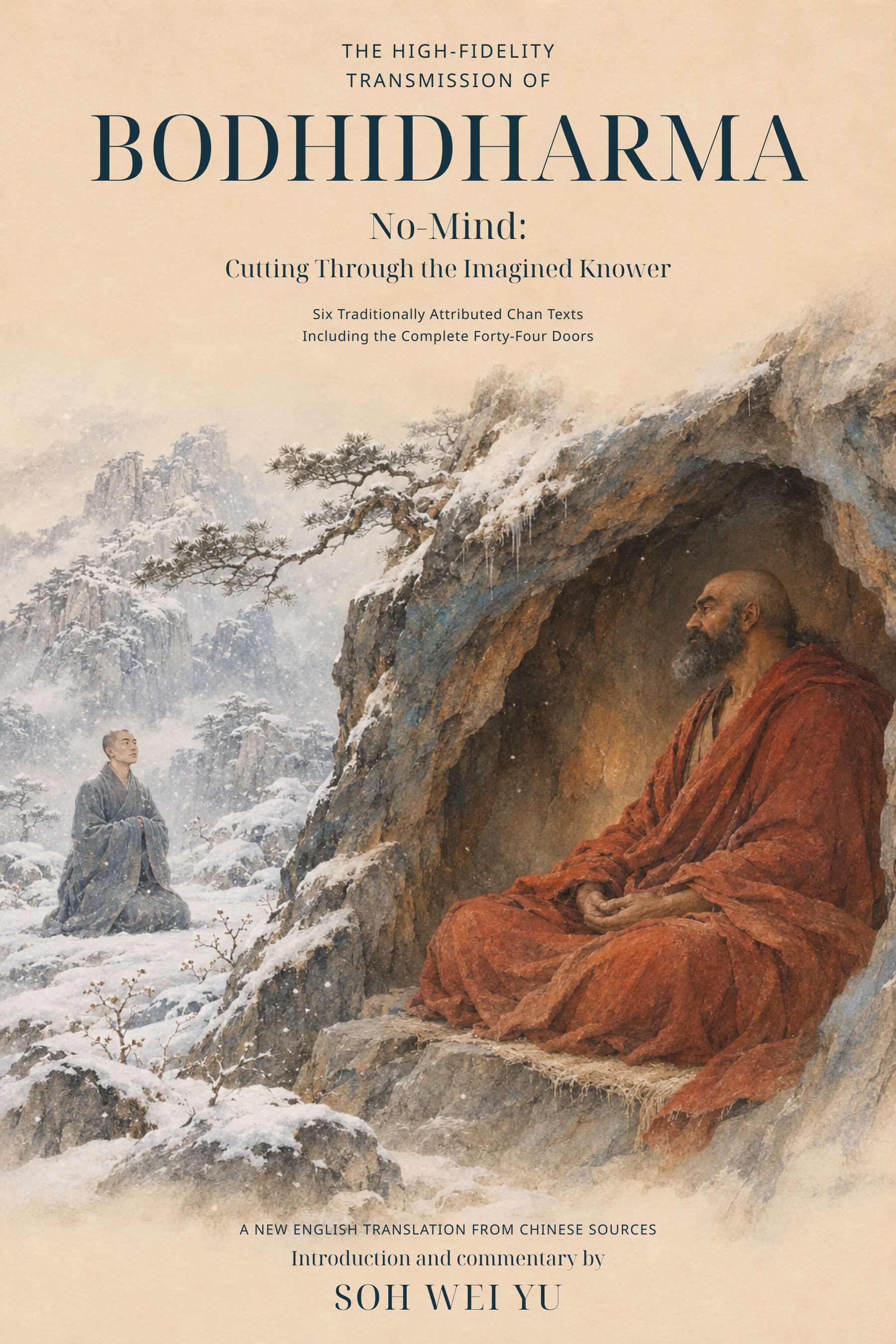
The second edition of The High-Fidelity Transmission of Bodhidharma presents a brand-new retranslation undertaken from the original Chinese texts, integrated with my extended preface, introduction, historical discussions and commentaries. It preserves the complete six-text collection traditionally associated with Bodhidharma, including all Forty-Four Doors.
The historical distinctions matter. A text’s traditional attribution to Bodhidharma and what can be established about its authorship or transmission are separate questions. The revised notes explain those distinctions while keeping the teachings themselves accessible to the reader.
- Renewed attention to the Chinese wording. The translation and notes have been repeatedly checked against the selected Chinese sources, with corrections where missing distinctions, unclear wording or differences between Chinese versions affected the meaning.
- Commentary integrated with the new translation. The longer explanations and personal reflections remain in the book, with quotations matched to the revised English text and placed alongside the relevant passages.
- More careful philosophical and practical distinctions. The revisions clarify discussions of No-Mind, awakening and continuing practice, including the distinction between seeing through self-view and the residual “I am” conceit. Terminology has also been refined, for example distinguishing karma, intentional action, from its ripening.
- Improved sources and reading aids. Translation notes, historical appendices, bibliography, glossary and cross-references have been reviewed together. Readers can follow the relationship between the translated passage, the Chinese evidence and the commentary more easily.
- New book design and navigation. The cover, 6 × 9-inch layout, headings, quotations and linked contents have been redesigned. The EPUB lets you adjust the text size and jump to individual works and the Forty-Four Doors.
Visit the Bodhidharma book page and download the second edition.
Huangbo: a new translation with the full commentary
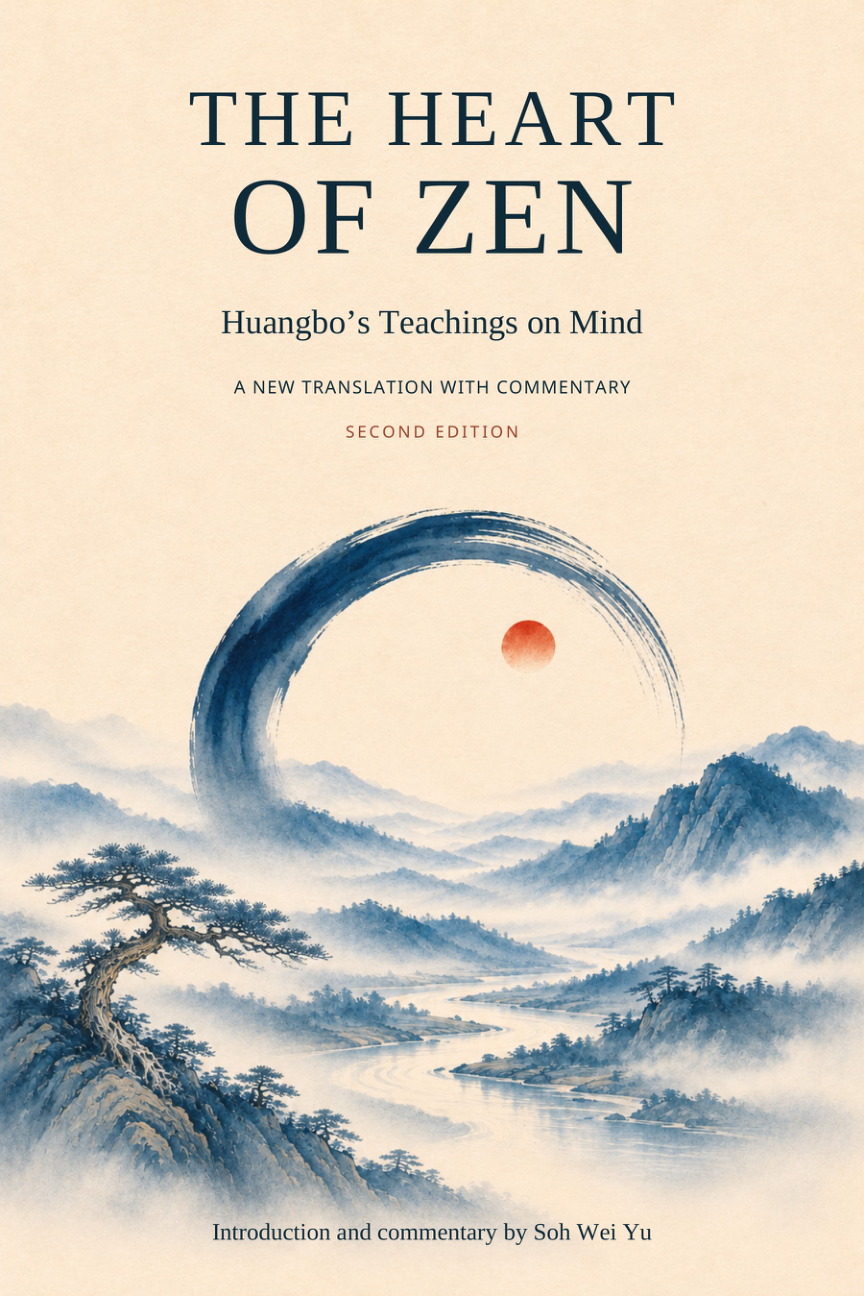
The second edition of The Heart of Zen presents a brand-new retranslation from the original Chinese, together with the substantive preface, historical discussions, explanations and personal commentaries from my 2025 book. The older English translation has been replaced, while the commentary has been carefully matched to the corresponding passages in the new text.
As in the 2025 edition, the volume includes Pei Xiu’s preface, the Essentials of Mind Transmission, the Wanling Record and its closing verse, and all 28 appended items. Both records and all 28 items were already in the earlier edition. It also retains the source notes and discussion of differences between surviving versions of the Chinese text, so readers can distinguish the selected text from related passages in other records.
Some of the main changes are:
- Expanded explanation of True Mind, No-Mind and anatta. The commentary gives greater attention to the experiential meaning of these teachings. In describing anatta, I use the formulation “no agent and no background subject,” while emphasizing the vividness of luminous knowingness as the appearances of the six senses.
- A clearer treatment of non-dual seeing and dependent origination. The mirror and reflection discussion now makes clear that Huangbo’s criticism concerns the seer–seen division. Seeing is not established as a subject reaching out toward an object, yet appearances still arise dependently. Nothing here requires an unchanging consciousness-substance behind experience.
- The full substantive commentary is retained. This includes my original critique of aspects of Blofeld’s interpretation, the complete John Tan passages discussed in the book, and the associated dialogues and reflections. The quotations remain distinguishable from my explanations.
- More precise source notes and attribution. Historical claims, the sources of quotations and differences between versions have been checked again. The notes distinguish the source of a passage from similar ideas elsewhere and from later interpretations.
- A redesigned reading edition. The book has new front and back covers, clearer type, clickable contents, a passage guide and easier links between the text and notes.
Visit the Huangbo book page and download the second edition.
Chinese AtR Practice Guide: revised text and a new design
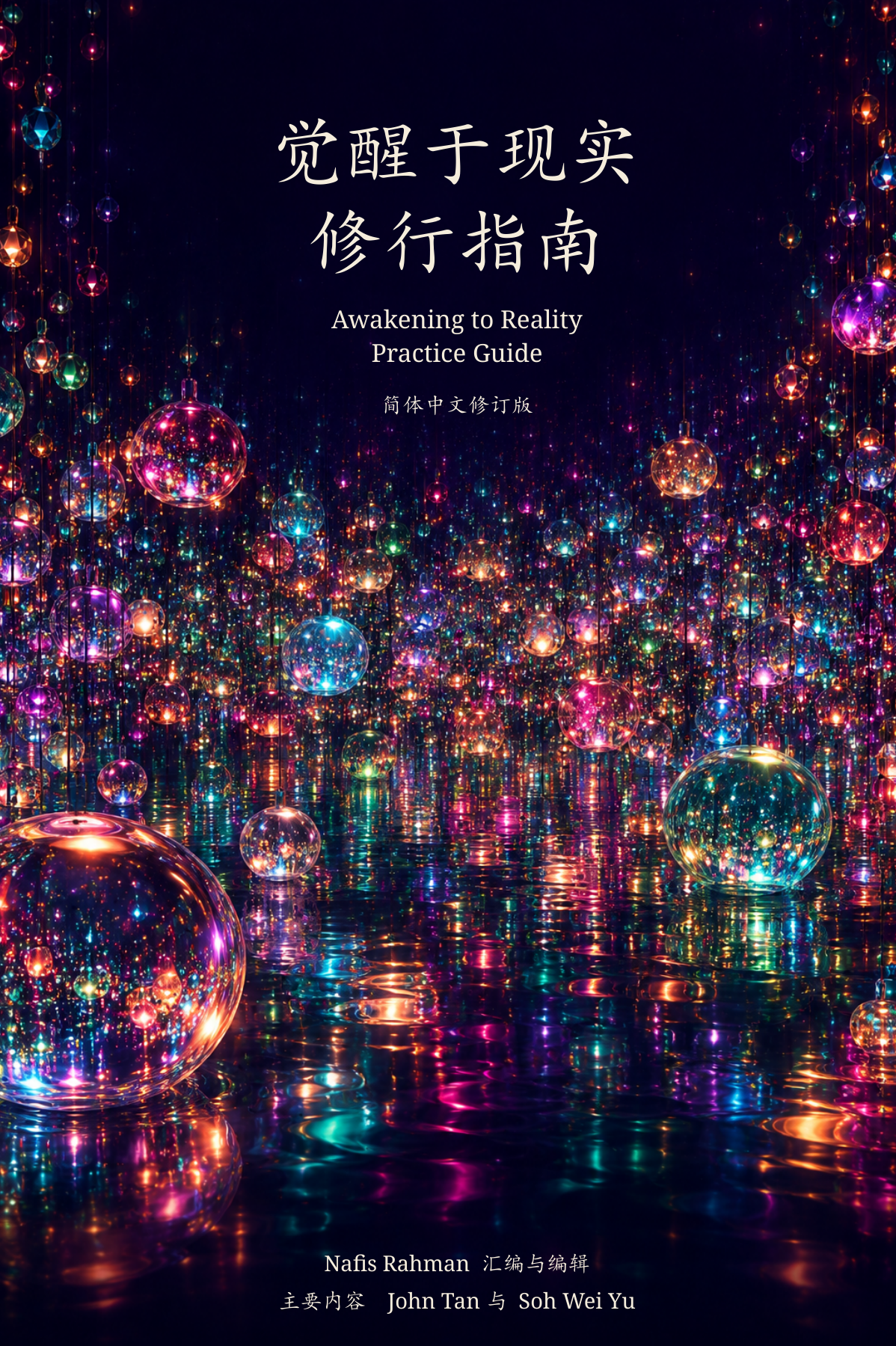
The Awakening to Reality Practice Guide was compiled and edited by Nafis Rahman, drawing primarily on writings by John Tan and myself. It brings together practical instructions and contemplations from the much longer Awakening to Reality: A Guide to the Nature of Mind.
The revised Chinese edition has been checked against the English guide and relevant sources. The corrections clarify meaning, identify who is speaking, improve quotation accuracy and explain key terms and references.
- Corrections that affect how the teaching is understood. These include a reversed meaning in a passage discussing experiences of “no body, no mind, no self,” a misidentified passage from Dōgen’s Zenki, and missing or ambiguous dialogue labels.
- Clearer terminology in context. Added explanations help readers distinguish “One Mind” as used in the AtR stage map from uses of the same expression in Huangbo and other Chan texts. The different contexts are preserved.
- Restored and better-organized supporting material. The diagram associated with Steven Heine’s discussion has been restored as a diagram redrawn in Chinese, with its source identified. Redundant Bassui passages have been removed, while longer Japanese source passages have been moved to an appendix with return links.
- A more readable Chinese book. The new 6 × 9-inch design has clearer Chinese type and chapter openings, clearly marked quotations and editorial notes, clickable contents and a short glossary.
- A new mirror-room cover. Inspired by Yayoi Kusama’s Infinity Mirror Rooms, the lights and reflections evoke Indra’s Net and total exertion. Nafis and I were drawn to this imagery because the whole scene participates in what appears: the lights, reflections, space and viewer together. This is our interpretation of the imagery in relation to the guide.
Special thanks to Nafis for compiling the guide, and to John Tan for the teachings and conversations that run throughout it.
Visit the Chinese practice guide page and download the revised edition.
Review and corrections
The full books have been checked and revised repeatedly, with the commentary and source material retained. Mistakes may still remain. If you notice a mistranslation, missing attribution, broken link or other error, please let me know, ideally with the passage and supporting source.
Where to begin
If you are new to AtR, please begin with the recommended reading order and free guides. The practice guide provides a practical introduction to the distinctions between I AM, non-duality, anatta, emptiness and total exertion. The Bodhidharma and Huangbo volumes offer further material for studying and contemplating these teachings in the context of Chan.
I hope these revised editions will be useful in your study and practice.
Soh


Comments